
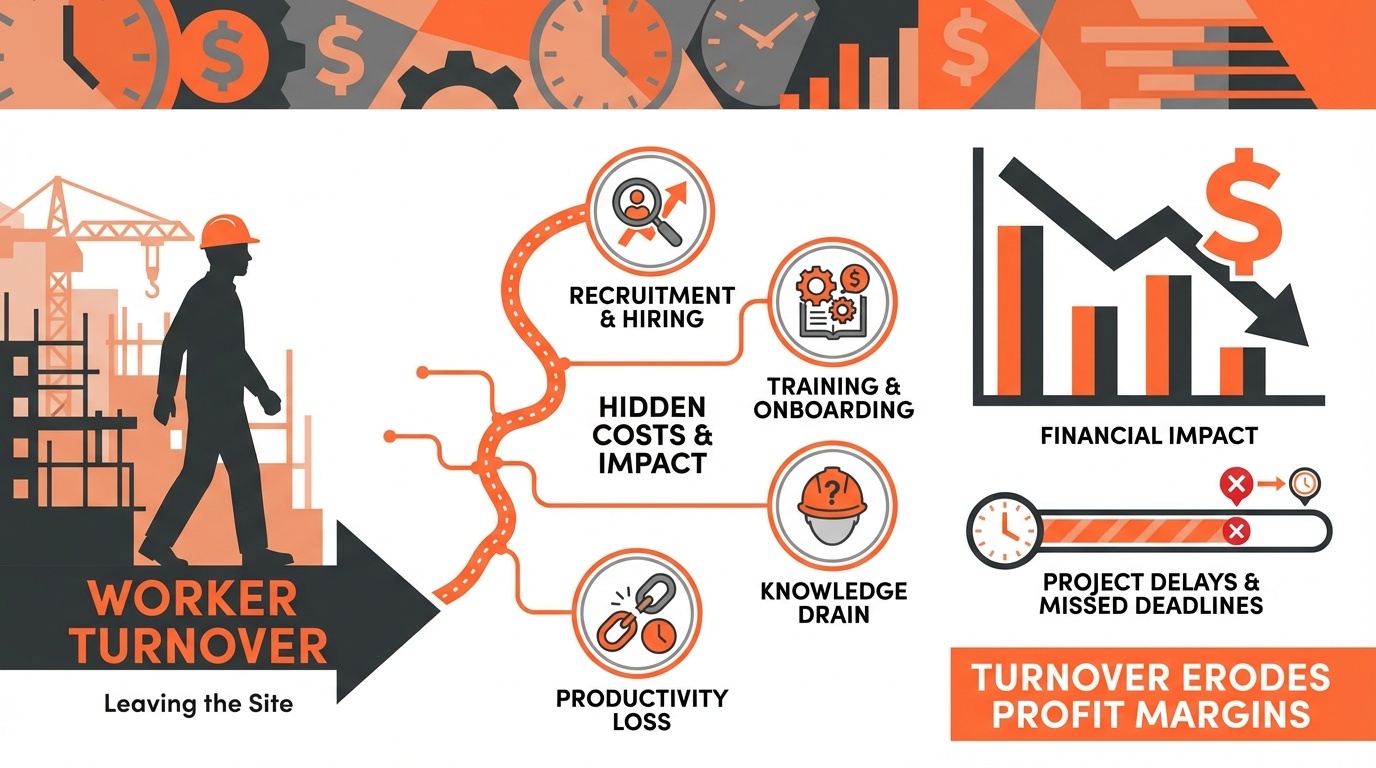
Turnover is one of the biggest hidden costs in construction project delivery. When experienced engineers and site staff leave mid-project, you face delays, knowledge loss, and the expense of finding and training replacements.
The construction industry has always struggled with high turnover rates. But the companies that succeed in retaining their teams have discovered that a few strategic changes can make a significant difference.
In this article, we will explore what keeps construction professionals engaged and how small improvements in retention can prevent major manpower disruptions later.
The True Cost of Construction Worker Turnover
Before we discuss solutions, it is important to understand exactly what turnover costs your projects.
Direct Financial Costs
When a construction worker leaves, you immediately face:
- Recruitment fees to find a replacement
- Advertising costs for job postings
- Time spent interviewing candidates
- Onboarding and training expenses
- Reduced productivity during the transition period
For specialized roles like senior engineers or BIM coordinators, these costs can easily reach 50 to 150 percent of annual salary.
Project Delays and Disruptions
Beyond money, turnover causes project disruptions:
- Work stops while you search for replacements
- New hires need time to learn project details
- Team morale drops when colleagues leave
- Quality may suffer during transitions
- Delays can strain client relationships
Working with a Singapore recruitment agency can help fill positions quickly, but prevention is always better than replacement.
Loss of Project Knowledge
Construction projects involve complex details that take time to learn:
- Site-specific challenges and solutions
- Client preferences and communication styles
- Subcontractor relationships and history
- Project documentation and filing systems
- Unwritten processes and team dynamics
When experienced team members leave, this valuable knowledge goes with them. New hires must rebuild this understanding from scratch.
What Keeps Engineers and Site Staff Engaged
Understanding what construction professionals value most helps you create a workplace they want to stay in.
Clear Overtime Structure and Predictable Hours
One of the top complaints in construction is unpredictable work schedules. Workers need to know:
- How overtime is calculated and paid
- Expected working hours for different project phases
- Advance notice for weekend or holiday work
- Fair compensation for extended hours
Best practices:
- Document your OT policy clearly in writing
- Communicate schedule expectations during hiring
- Give as much advance notice as possible for schedule changes
- Pay overtime promptly and accurately
- Consider time-off-in-lieu options for work-life balance
When workers know what to expect and feel fairly compensated, they are much more likely to stay.
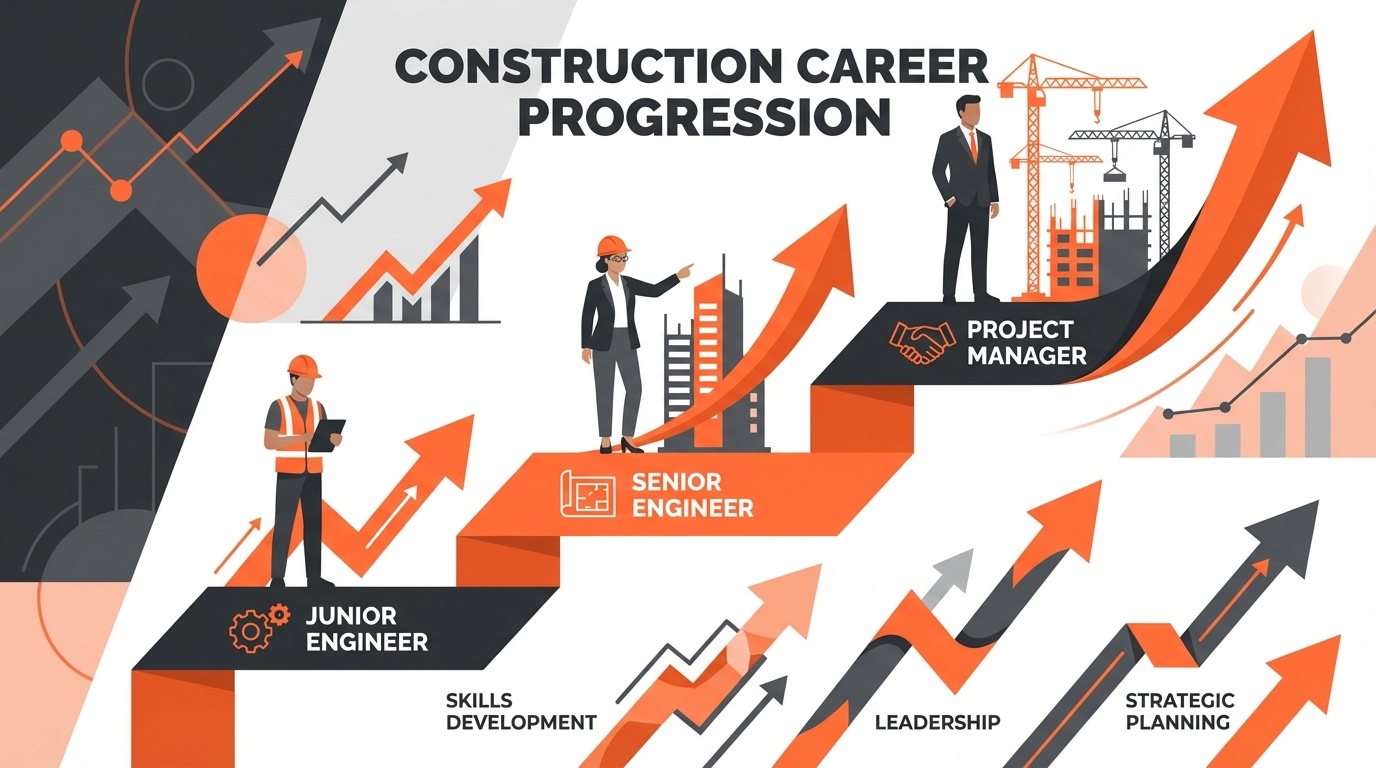
Defined Career Pathway to Senior Engineer or Project Manager
Construction professionals want to see a future with your company. They need clear answers to:
- What does career progression look like?
- How long until promotion to the next level?
- What skills and experience are required?
- Who will mentor me along the way?
Creating clear pathways:
- Map out typical career progression timelines
- Define specific requirements for each level
- Assign mentors to junior staff
- Conduct regular career development discussions
- Promote from within whenever possible
A site engineer who sees a clear path to senior engineer and eventually project manager is far more likely to stay for the long term.
Supportive Site Leadership
The relationship between workers and their direct supervisors is one of the strongest predictors of retention.
What supportive leadership looks like:
- Regular check-ins and feedback
- Recognition for good work
- Help solving problems rather than just pointing them out
- Fair treatment and consistent policies
- Willingness to listen to concerns
- Protection from unreasonable demands
Site managers who create positive working environments keep their teams intact. Those who create toxic environments see constant turnover.
Sponsorship for Professional Development Courses
Construction is a technical field that constantly evolves. Professionals want to keep their skills current and marketable.
High-value training programs:
- BCSS (Building Construction Supervisory Staff) courses
- WSH (Workplace Safety and Health) certifications
- BIM (Building Information Modeling) training
- Project management certifications
- Technical software training (AutoCAD, Revit, Primavera)
- Green building and sustainability courses
Creating an effective training program:
- Identify skills gaps in your team
- Budget for training and certification costs
- Allow time off for course attendance
- Celebrate certifications and new qualifications
- Link training to career progression
- Consider bond agreements for expensive courses
When you invest in your team’s development, they see a commitment to their future and are more likely to stay.
Reasonable Allowances and Site Conditions
Construction work is physically demanding. The companies that retain workers best understand this and provide appropriate support.
Key allowances and benefits:
- Transport allowances for remote sites
- Meal allowances for long hours
- Mobile phone allowances
- PPE (Personal Protective Equipment) provided
- Site welfare facilities (rest areas, clean toilets, drinking water)
- Medical coverage beyond basic requirements
- Annual health screenings
Improving site conditions:
- Adequate shelter from weather
- Clean and well-maintained facilities
- Regular safety inspections
- Quality tools and equipment
- Reasonable workloads
- Safe working environments
These may seem like small details, but they add up to a workplace where people feel valued and cared for.
Practical Strategies to Improve Retention
Beyond the key factors above, several practical strategies can help reduce turnover on your construction projects.

Conduct Stay Interviews, Not Just Exit Interviews
Most companies only ask why people leave. Smart companies regularly ask why people stay.
Stay interview questions:
- What do you look forward to when coming to work?
- What would make you consider leaving?
- What would you change about your role if you could?
- Do you feel your contributions are recognized?
- What are your career goals for the next 1 to 3 years?
These conversations help you identify and fix problems before people decide to leave.
Create a Strong Onboarding Program
First impressions matter. A good onboarding program sets new hires up for success.
Effective onboarding includes:
- Comprehensive site orientation
- Clear explanation of roles and expectations
- Introduction to all team members
- Assignment of a buddy or mentor
- Regular check-ins during the first 90 days
- Training on systems and procedures
Workers who feel welcomed and supported from day one are more likely to stay long-term.
Recognize and Reward Good Performance
People want to feel appreciated. Recognition does not always require money.
Ways to recognize great work:
- Public acknowledgment at team meetings
- Personal thank-you notes from managers
- Employee of the month programs
- Project completion bonuses
- Additional responsibilities for high performers
- Recommendations and references for future opportunities
Regular recognition reinforces positive behavior and makes people feel valued.
Build Team Cohesion
Construction projects require teamwork. Teams that work well together stay together.
Team-building approaches:
- Regular team lunches or dinners
- Project milestone celebrations
- Team problem-solving sessions
- Social events outside work
- Open communication channels
- Conflict resolution processes
Strong team bonds make people think twice before leaving.
Be Competitive with Compensation
While money is not everything, it does matter. You cannot retain good people with below-market pay.
Compensation best practices:
- Conduct regular salary benchmarking
- Adjust for experience and performance
- Review compensation annually
- Be transparent about how pay is determined
- Consider bonuses for project completion
- Offer retention bonuses for key staff on long projects
Working with a construction recruitment specialist can help you understand current market rates.
Special Considerations for Different Construction Roles
Different positions have different retention challenges.
Site Engineers and Project Engineers
Key retention factors:
- Reasonable working hours
- Clear technical mentorship
- Exposure to different project types
- Opportunities to lead small projects
- Training on new technologies
BIM Coordinators and Modelers
Key retention factors:
- Latest software and hardware
- Continuing education in BIM technologies
- Variety in project types
- Recognition for technical expertise
- Competitive salaries matching tech industry
WSH Officers and Coordinators
Key retention factors:
- Respect from site management
- Authority to enforce safety standards
- Ongoing safety training and certifications
- Reasonable workloads
- Clear career progression
Skilled Trades Workers
Key retention factors:
- Fair piece-rate or day-rate compensation
- Safe working conditions
- Reliable work schedules
- Respect from supervisors
- Quality tools and materials
Understanding what matters most to each role helps you create targeted retention strategies.
When Turnover Is Unavoidable
Despite your best efforts, some turnover is inevitable. The key is managing it well.
Plan for Natural Turnover
Accept that some percentage of turnover is normal:
- Workers relocate for family reasons
- Career changes happen
- Retirement is natural
- Project end dates create transitions
Managing planned departures:
- Require reasonable notice periods
- Document all processes and knowledge
- Cross-train team members
- Build relationships with specialist construction recruiters
- Maintain a talent pipeline for key roles
Create Knowledge Transfer Processes
When someone does leave, capture their knowledge:
- Exit interviews to document lessons learned
- Handover periods with replacements
- Written documentation of processes
- Video recordings of specialized procedures
- Updated project files and contact lists
Build a Talent Network
Stay connected with former employees:
- Many may return in the future
- They can refer other talented people
- They may become clients or partners
- They provide market intelligence
- They are proof of your positive workplace
Related reading:
- Year-End Hiring Strategy: Why Q4 is Golden Window for Recruitment
- How to Hire Skilled Construction Workers Without Overpaying
Measuring Your Retention Success
Track these metrics to understand if your retention strategies are working:
Key Retention Metrics
- Turnover rate: Number of departures divided by average headcount
- Voluntary vs involuntary turnover: Understand why people leave
- Time to vacancy: How long positions stay open
- Tenure by role: How long different positions retain staff
- Cost per hire: Total recruitment costs divided by new hires
- New hire retention: Percentage staying past 90 days
Regular Review and Adjustment
Retention is not a one-time fix. It requires ongoing attention:
- Review metrics quarterly
- Survey staff regularly
- Test new retention initiatives
- Adjust based on feedback
- Benchmark against industry standards
How CoreStaff Helps Construction Firms Stabilize Project Manpower
At CoreStaff, we understand that while reducing turnover is ideal, you still need reliable access to construction talent when positions do open up.
We help construction firms:
- Fill urgent vacancies quickly with pre-screened candidates
- Provide temporary staff during peak periods
- Build talent pipelines for anticipated needs
- Advise on market salary rates
- Support long-term manpower planning
If you need help stabilizing your project manpower, whether through better hiring or strategic staffing solutions, we are ready to support you.
Small Changes Can Prevent Major Disruptions
Reducing worker turnover in construction does not require massive investment. Often, small improvements in key areas make the biggest difference:
- Clear and fair overtime policies
- Visible career progression paths
- Supportive and respectful leadership
- Investment in training and development
- Reasonable working conditions and benefits
A small improvement in retention can prevent major manpower disruptions later. When your team stays intact, projects run smoother, costs stay down, and everyone benefits.
If retention is a challenge on your current projects, start with the areas that matter most to your team and build from there.
Contact CoreStaff for Construction Staffing Support
Need help with construction recruitment and retention strategies? CoreStaff specializes in helping construction firms build and maintain strong teams.
Get in touch:
- Phone: +65 6288 6866
- Email: recruit@corestaff.com.sg
- Website: www.corestaff.com.sg
Let us help you reduce turnover and stabilize your project teams.