

For decades, the university degree was the golden ticket in Singapore. It was the primary filter for almost every professional job. If you had the paper, you got the interview. If you didn’t, your resume often went straight to the bin. But in 2026, this old rulebook is being rewritten. A quiet revolution has taken over the hiring landscape across the island.
We are witnessing the rise of the “Skills-Based Hiring Revolution.” Major companies, SMEs, and even government sectors are increasingly removing degree requirements from job descriptions. Instead of asking “Where did you go to school?”, they are asking “What can you actually do?”. This shift is not just a trend; it is a necessity born from talent shortages and the rapid pace of technological change.
As a trusted recruitment agency in Singapore, Corestaff has been at the forefront of this change. We have helped numerous clients transition from credential-based hiring to competency-based hiring. The results have been transformative. Companies are finding hidden gems in the talent pool, and candidates are finally being judged on their true potential.
In this article, we will dive deep into why this shift is happening now, the massive benefits it brings, and how your company can practically implement a skills-based hiring strategy in 2026.
The Degree Requirement Crisis
Why change a system that has worked for so long? The answer lies in the “Degree Gap.” For years, employers used degrees as a proxy for skills. The assumption was that a degree holder possessed critical thinking, discipline, and specific technical knowledge. While often true, this proxy has become less reliable and more restrictive.
The pace of technology is moving faster than university curriculums. A computer science degree earned four years ago may not cover the latest AI tools or coding frameworks. Meanwhile, a self-taught developer who has spent the last two years building projects on GitHub might be far more qualified for the job. By insisting on a degree, companies are effectively locking out this modern, agile talent.
Furthermore, degree inflation has led to roles such as administrative assistants and sales representatives requiring university qualifications that are not necessary for their day-to-day tasks. This narrows the talent pool unnecessarily and leads to higher turnover as overqualified staff become bored. The crisis is clear: relying solely on degrees is causing companies to miss out on the best people for the job.
The Rise of Skills-Based Hiring in Singapore
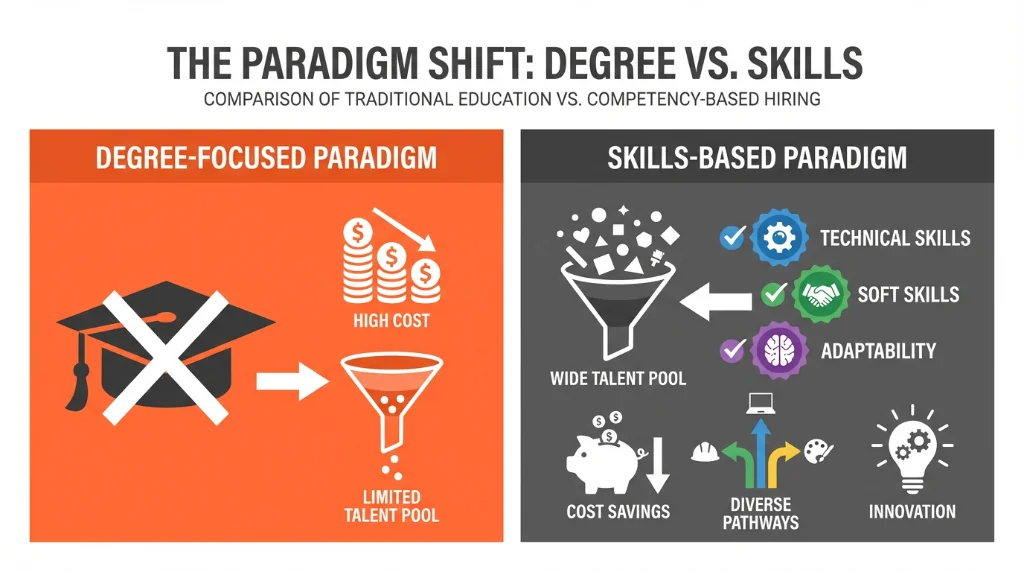
Singapore is uniquely positioned to lead this revolution. The government’s push for “SkillsFuture” has laid the groundwork for a culture of lifelong learning. In 2026, this vision is becoming a practical reality in hiring.
We are seeing a move away from rigid academic qualifications towards “micro-credentials” and practical assessments. Tech giants were the first to move, with companies like Google and IBM dropping degree requirements years ago. Now, traditional Singaporean firms in finance, logistics, and retail are following suit. They realize that a certificate from a six-month intensive bootcamp often signals more relevant, up-to-date skills than a generic three-year degree.
This is particularly evident in the construction sector. As Singapore’s construction industry booms, demand for specific technical skills—such as BIM modelling and sustainable building practices—far outstrips the supply of degree holders. Innovative construction firms are hiring based on technical certifications and on-site experience rather than academic pedigree.
Benefits for Employers
Switching to skills-based hiring is not just about being “progressive.” It makes hard business sense. Here are the three most significant wins for employers.
1. Expanding the Talent Pool
When you remove the “Degree Required” filter, you instantly multiply your candidate pool. You open the door to self-taught experts, career switchers, and talented individuals who took alternative educational paths. In a tight labor market, this is a massive advantage. It allows you to fill roles faster and reduces the painful vacancy times that hurt productivity.
2. Driving Diversity and Innovation
Degree requirements often inadvertently filter out candidates from lower-income backgrounds who couldn’t afford university. By focusing on skills, you level the playing field. You bring in people with diverse life experiences and perspectives. This diversity of thought is a key driver of innovation. A team composed of people from diverse backgrounds will solve problems more creatively than a team where everyone has the exact same educational background.
3. Cost Savings and Retention
Skills-based hires often have higher retention rates. They are hired for the specific job they want to do and are qualified to do. They are less likely to feel “entitled” to rapid promotions based solely on their degree status. Additionally, you can often find excellent talent at more sustainable salary levels compared to the premium demanded by graduates from top-tier universities. This efficient use of budget is similar to the cost benefits
seen in temporary staffing models.
How to Implement a Skills-Based Hiring Strategy
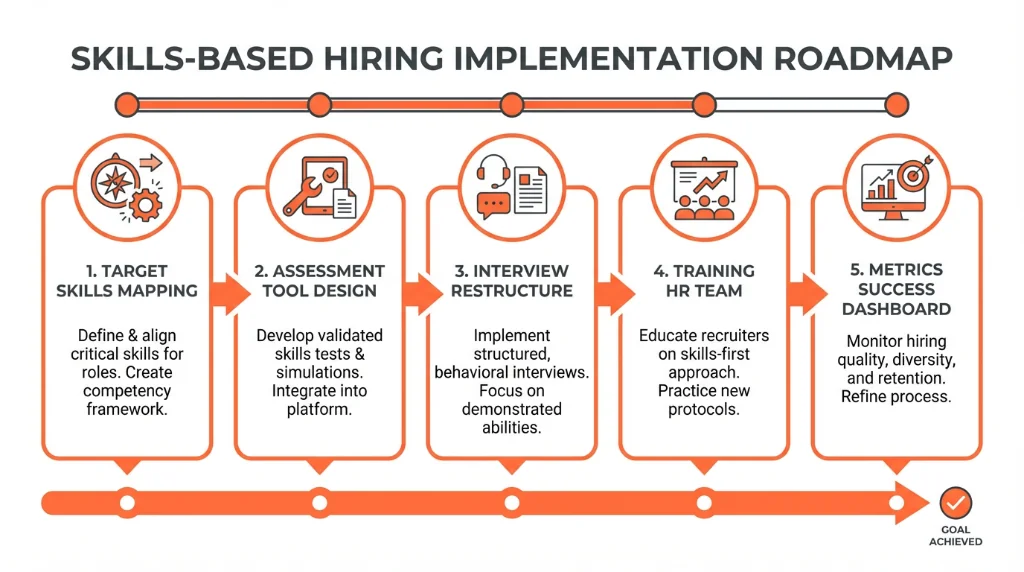
Ready to make the switch? Here is a practical roadmap for Singapore companies in 2026.
Step 1: Rewrite Job Descriptions
Start by auditing your job ads. Delete “Bachelor’s Degree Required” unless it is legally mandatory (e.g., for doctors or lawyers). Instead, list the specific competencies needed. For example, change “Degree in Marketing” to “Proven ability to manage social media campaigns and analyze Google Analytics data.”
Step 2: Use Pre-Employment Assessments
If you can’t rely on a degree as proof of ability, you need a new way to verify skills. Implement practical tests early in the process.
- For coders: A timed coding challenge.
- For writers: A short paid writing assignment.
- For sales: A mock cold-call or pitch simulation.
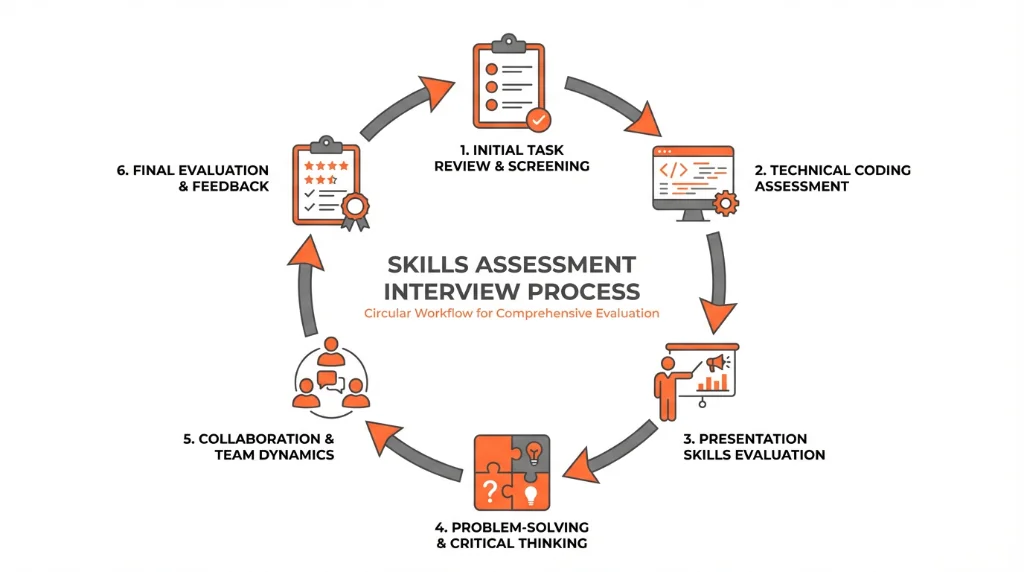
These “work sample tests” are the single best predictor of job performance—far better than education level or even years of experience.
Step 3: Train Interviewers
Train your hiring managers to look past the school name on a resume. Teach them to ask behavioral questions that dig into how a candidate has applied their skills in the past. Questions like “Tell me about a time you solved a complex problem using Python” are much more revealing than “What was your GPA?”.
Common Challenges and How to Overcome Them
Transitioning isn’t always smooth. One common fear is the “risk” of hiring non-graduates. To mitigate this, consider starting with roles where skills are easily measurable, like IT or digital marketing. Another challenge is convincing traditional stakeholders. Use data to make your case. Track the performance of non-degree hires versus graduates. The numbers will likely speak for themselves.
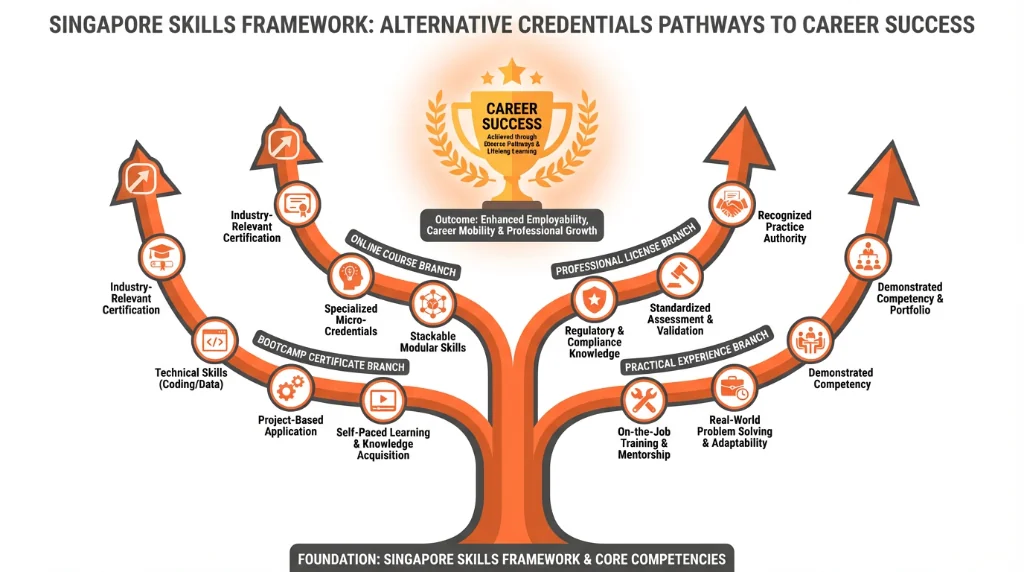
Also, leverage existing frameworks. The Singapore government’s Skills Frameworks provide detailed maps of skills required for various job roles. Use these as a neutral, authoritative guide to define what “competent” looks like for your open positions. This aligns your hiring with national standards and helps you communicate clearly with candidates.
Conclusion
The era of the degree as the ultimate gatekeeper is ending. In 2026, skills are the new currency in Singapore’s job market. Companies that embrace this shift will access a wider, more diverse, and highly motivated talent pool. They will build teams that are defined not by what they studied years ago, but by what they can deliver today.
Ready to Modernize Your Hiring?
Don’t let outdated requirements hold your business back. Corestaff specializes in identifying top talent based on proven capabilities, not just credentials.
Get in touch with Corestaff:
- Phone call: +65 6288 6866
- Email: recruit@corestaff.com.sg
- Address: 175A Bencoolen Street #11-05 Burlington Square Singapore 189650