
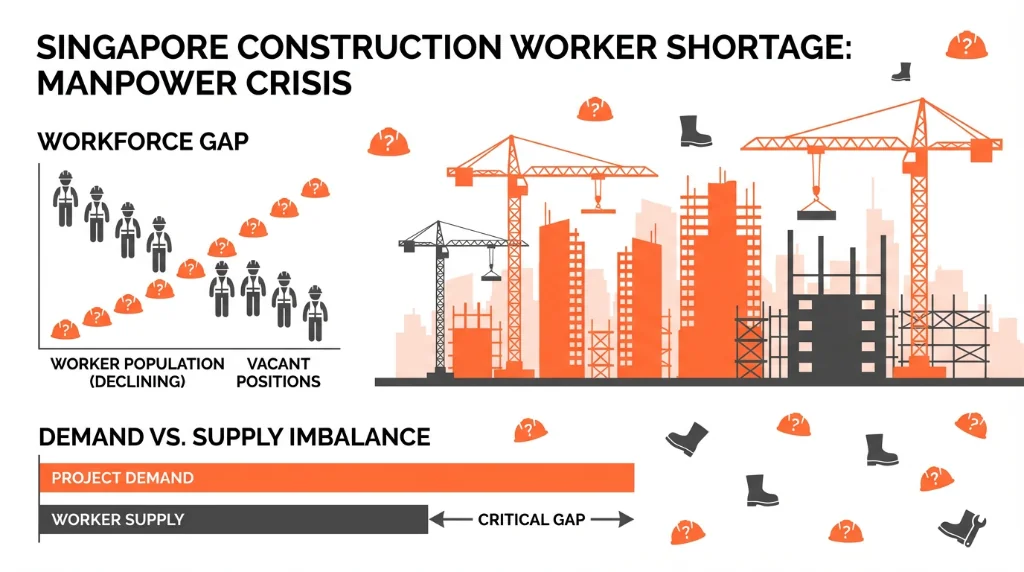
If you are managing a construction project in Singapore in 2026, you are likely facing a familiar headache: finding enough skilled people to get the job done. The cranes are moving, the projects are approved, but the manpower gap is widening. The construction worker shortage is no longer just a temporary blip; it has become a critical strategic challenge for every firm in the built environment sector.
From specialized BIM modellers to experienced site supervisors and general labourers, the demand far outstrips supply. Projects are being delayed not by a lack of materials, but by a lack of hands. As a specialized recruitment agency in Singapore, Corestaff speaks to construction bosses every day. We hear the same story: “We have the work, but we can’t find the workers.”
However, throwing your hands up is not an option. Successful companies are adapting. They are finding new ways to attract, retain, and deploy talent. This article will peel back the layers of this crisis. We will review the hard statistics, understand why this is happening, and, most importantly, provide you with four concrete, strategic solutions to ensure your projects stay on track in 2026.
The Singapore Construction Shortage Statistics
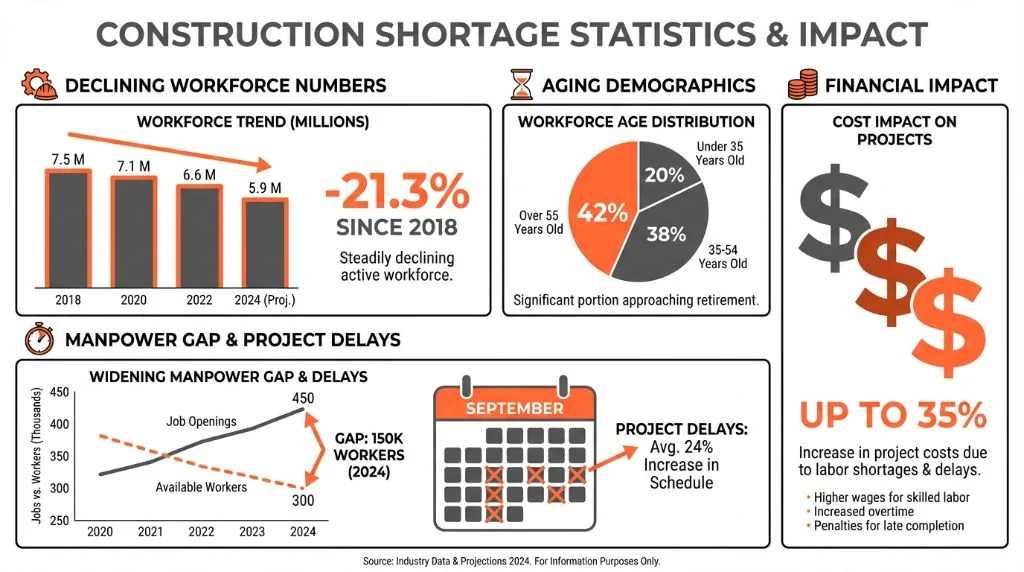
To solve a problem, you must first measure it—the numbers for 2026 paint a stark picture. The Building and Construction Authority (BCA) projected construction demand to range from S$32 billion to S$38 billion this year. This boom is driven by major public-sector projects such as the Cross Island Line, Changi Airport Terminal 5, and ongoing HDB developments.
Yet, the workforce is not growing at the same speed. Industry reports indicate a manpower shortfall of nearly 15% across the sector. That translates to tens of thousands of unfilled roles. The vacancy rate for skilled technical roles, such as engineers and safety officers, is even higher.
This imbalance creates a fierce “war for talent.” Salaries for specific hard-to-fill construction roles have risen by 10-20% compared to 2024 levels. For employers, this means that the old ways of hiring—posting a job ad and waiting for calls—are dead.
Root Causes: Why Are We Here?
This shortage didn’t happen overnight. It is the result of a “perfect storm” of three key factors.
1. The Aging Workforce
Singapore’s local construction workforce is aging rapidly. Many of the experienced supervisors and project managers who built the nation’s skyline in the 90s are now retiring. They are taking decades of site knowledge with them. Unfortunately, there aren’t enough young locals entering the industry to replace them.
2. Tighter Foreign Worker Policies
Singapore has always relied on foreign labour for construction. However, government policies have progressively tightened to reduce reliance on low-skilled foreign manpower. The focus has shifted to higher-skilled workers and automation. While this is good for long-term productivity, in the short term, it restricts the flow of easy labour that companies used to depend on. The quota (Dependency Ratio Ceiling) and levy costs make hiring foreign workers more expensive and complex.
3. The Image Problem
Let’s be honest: construction still suffers from an image problem. Young job seekers often view it as “3D”—Dirty, Dangerous, and Demanding. Even for engineering graduates, the allure of air-conditioned tech offices or finance roles is strong. The industry struggles to pitch itself as a high-tech, innovative career path, even though it is rapidly becoming one.
Solution 1: Strategic Foreign Worker Recruitment
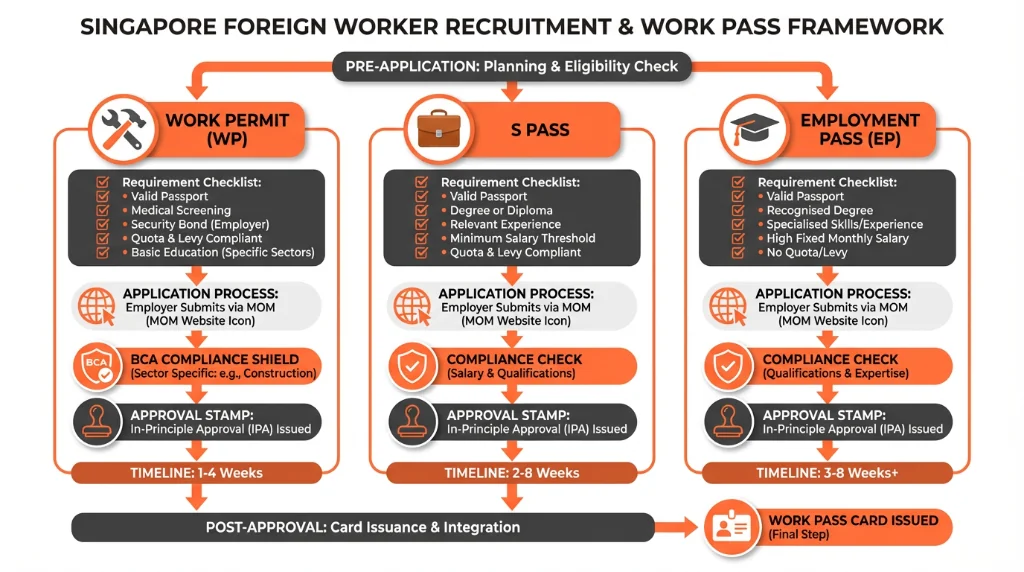
Despite the tighter rules, foreign talent remains the backbone of the industry. The key is to stop treating foreign recruitment as a commodity and start treating it as a strategy. You can no longer bring in “numbers.” You need to bring in “skills.”
Mastering the Pass Framework: Employers must be experts in the different work pass categories.
- Work Permits (WP): Still the primary route for skilled tradesmen from approved source countries. The key here is to target “Higher Skilled” (R1) workers who have lower levies and longer allowable employment periods.
- S Pass: Crucial for site supervisors and mid-level technicians. The qualifying salary has increased, so you need to ensure these workers deliver productivity that matches their cost.
- Employment Pass (EP): For your senior engineers and project managers. With the COMPASS framework now entirely in play, you need to ensure your firm scores well on diversity and local employment to attract top-tier professionals.
Partnering with experts in construction recruitment in Singapore can help you navigate these complex quota calculations and source candidates from pre-approved, high-quality training centres overseas.
Solution 2: Invest in Training and Up-Skilling
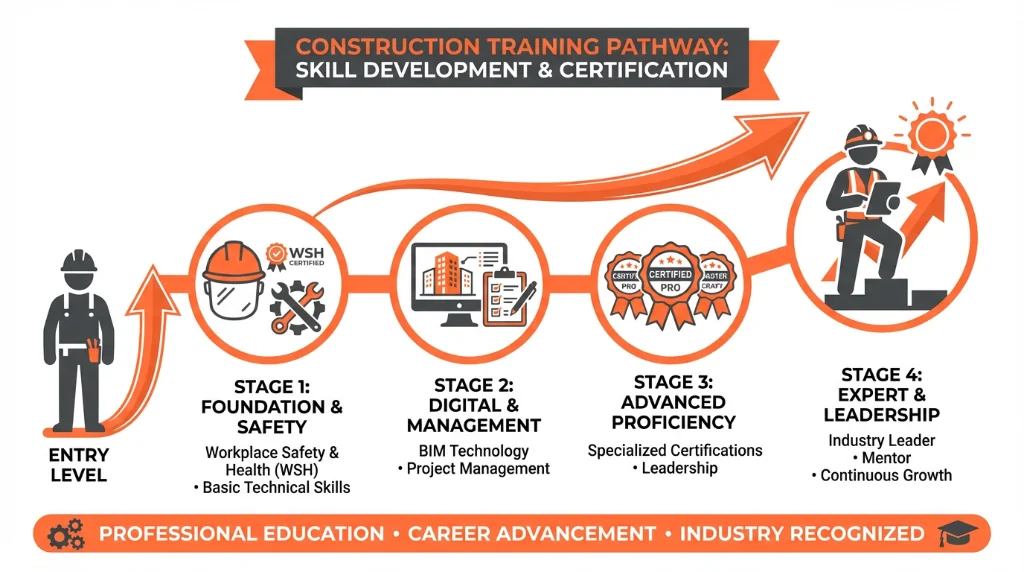
If you can’t find the perfect worker, you have to build them. In 2026, companies that treat training as an expense will fail; companies that treat it as an investment will survive.
The “Grow Your Own” Strategy: Instead of searching for a senior BIM coordinator for six months, hire a junior drafter with potential and put them through an intensive certification course. The cost of the course is often less than the recruitment fee and salary premium for a senior hire.
Leverage Government Support:
Singapore offers generous support for this. The Workforce Singapore (WSG) Career Conversion Programmes (CCP) are excellent. They help you hire mid-career switchers from other industries and train them for construction roles. You provide salary support during the training period and gain a loyal employee who brings fresh perspectives from diverse sectors.
Solution 3: Aggressive Retention Strategies
The easiest way to address a labour shortage is to prevent your current employees from leaving. Turnover is a silent killer. Losing an experienced site engineer mid-project costs you months of delay and significant turnover costs due to lost knowledge.
Fixing the Basics:
- Clear Career Paths: Do your workers know how to get promoted? If they don’t see a future with you, they will look for it elsewhere. Map out the journey from “General Worker” to “Supervisor” to “Site Foreman.”
- Fair Overtime & Benefits: Construction is hard work. Ensure your overtime policies are transparent and fair. Small perks such as improved site canteens, transport allowances, or better safety gear demonstrate that you respect your team.
- Stay Interviews: Don’t wait for the resignation letter. Conduct “stay interviews” with your key staff. Ask them: “What would make you leave?” and “What keeps you here?” Fix the problems before they walk out the door.
Solution 4: Embrace Technology and Automation
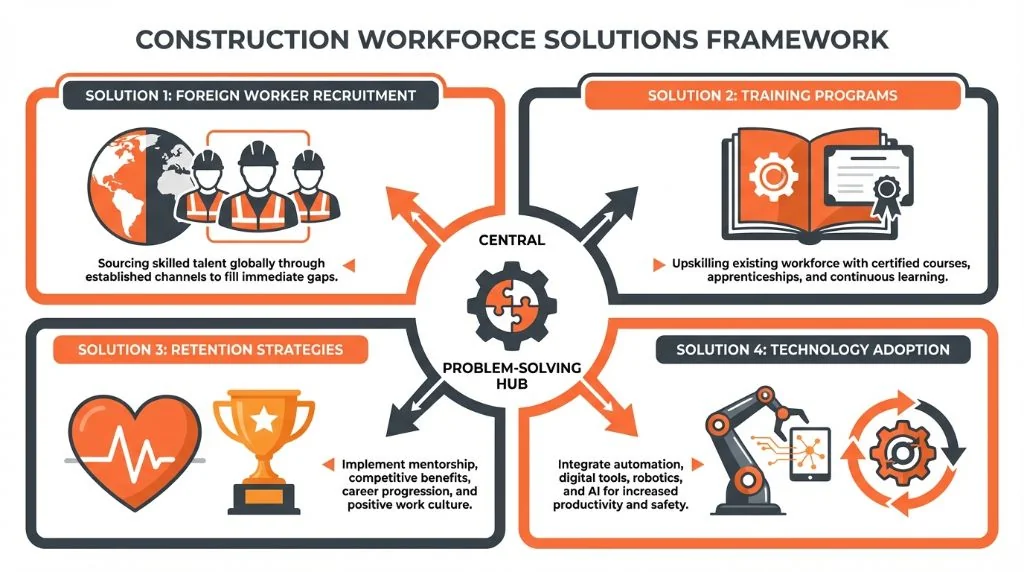
Finally, we must do more with less. If you can’t hire more people, you must increase the productivity of your current team. This is where Design for Manufacturing and Assembly (DfMA) comes in.
Move Work Off-Site:
Prefabricated Prefinished Volumetric Construction (PPVC) moves work from the chaotic, muddy site to a controlled factory environment. It requires fewer workers on-site and is faster and safer.
Digital Tools:
Simple digital tools can save hours of manual admin. Using tablets for site inspections instead of paper forms, or drones for facade inspections instead of erecting scaffolding, saves significant hours of manpower. It also makes the job more attractive to younger, tech-savvy talent.
This technological shift isn’t just about robots; it’s about hiring skilled workers cost-effectively by equipping them with tools that multiply their output.
Conclusion: The Path Forward
The construction worker shortage in Singapore is real, but it is not insurmountable. The companies that will thrive in 2026 are not the ones complaining about a labour shortage. They are the ones who recruit strategically, train aggressively, retain passionately, and automate intelligently.
This is a time for leadership. By building a strong employer brand and a resilient workforce strategy, you can turn this crisis into a competitive advantage.
Need Help Finding Construction Talent?
Don’t let manpower shortages delay your projects. Corestaff specializes in sourcing hard-to-find construction professionals for Singapore’s top firms.
Please speak to our construction recruitment specialists today and secure the skilled team you need for 2026.
Contact us:
- Phone call: +65 6288 6866
- Email: recruit@corestaff.com.sg
- Address: 175A Bencoolen Street #11-05 Burlington Square Singapore 189650