

The world of work is changing faster than ever before. If you look back just a few years, hiring was a very manual process. HR managers spent hours reading stacks of paper resumes. They made countless phone calls to schedule interviews. Today, in 2026, the landscape of recruitment in Singapore looks completely different.
Artificial Intelligence (AI) has moved from being a futuristic idea to a daily tool. It is no longer just for big tech companies. Small and medium-sized businesses in Singapore are also using AI to identify top talent. This shift is not just about saving time. It is about making better decisions, reducing bias, and finding people who are the perfect fit for a company culture.
As a leading recruitment agency in Singapore, Corestaff has closely observed this transformation. We see how companies that embrace these new tools are winning the war for talent. They are hiring faster and securing better candidates. On the other hand, companies that stick to old methods are
finding it more challenging to compete.
In this article, we will explore seven key AI-driven hiring trends shaping the market in 2026. We will look at how these tools work, why they matter, and how your business can use them to stay ahead.
The Current State of AI in Singapore Recruitment
Singapore has always been a forward-thinking nation. The “Smart Nation” initiative has pushed digital adoption across all sectors. The recruitment industry is a prime example of this success. By 2025, we saw the early adoption of simple automated tools. Now, in 2026, we are seeing sophisticated AI systems that can think, learn, and predict.
The government continues to support this growth. There are grants and programs available for companies to digitize their HR processes. This support has made it easier for Singaporean businesses to invest in new technology. The result is a more efficient and dynamic job market.
However, the human element remains vital. AI does not replace the recruiter; it empowers them. It takes away the repetitive tasks. This allows HR professionals to focus on what humans do best: building relationships and understanding people. This balance between high-tech and high-touch is the defining feature of recruitment in 2026.
7 Key AI Trends Shaping 2026
Let’s dive into the specific technologies that are changing the game. These seven trends are currently dominating Singapore’s recruitment landscape.
1. AI Agents: The Autonomous Recruiter
Imagine having a recruiter who works 24 hours a day, never sleeps, and never takes a break. That is what AI Agents are. These are advanced software programs that act independently to achieve a goal. In the past, you had to tell software exactly what to do. Now, you give the AI Agent a goal, like “find five candidates for a Senior Marketing Manager role,” and it figures out the rest.
These agents can search professional networks such as LinkedIn. They can identify potential candidates based on their skills and experience. They can even send personalized messages to these candidates to see if they are interested. If a candidate replies, the agent can schedule an interview directly into your calendar. This level of automation is revolutionary. It frees up human recruiters to focus on interviewing and assessing top candidates.
2. AI Twins: Cloning Your Best Performers
Every company has star employees. These are the people who consistently deliver excellent results, fit perfectly with the team, and stay with the company for a long time. Wouldn’t it be great if you could clone them? With AI Twins, you effectively can.
This technology analyzes the profile of your top performers. It considers their skills, background, education, and working style. It creates a digital “twin” or profile of what success in that specific role looks like. Then, the AI scans the job market to find candidates who match this digital twin. This is much more accurate than just writing a job description. It helps you identify people with the same potential for success as your top current employees.
3. Next-Gen Resume Scoring
For years, companies used Applicant Tracking Systems (ATS) to scan resumes. These old systems were quite simple. They looked for specific keywords. If a resume didn’t have the exact keywords, it was rejected. This meant many strong candidates were overlooked simply because they used different words to describe their skills.
In 2026, we use Next-Gen Resume Scoring. This AI understands context. It reads a resume like a human would. It understands that “managing a team” and “leading a group” are similar. It can infer skills from a candidate’s experience, even if they aren’t explicitly listed. This provides a much fairer assessment. It ensures that good candidates rise to the top of the pile, regardless of how good they are at “keyword stuffing.”
4. Automated Candidate Matching
Matching a candidate to a job is an art. You have to consider skills, salary expectations, location, and cultural fit. AI is now mastering this art. Automated Candidate Matching systems can look at thousands of profiles in seconds.
They score each candidate against the job requirements and give them a “match percentage.” This helps recruiters prioritize who to call first. It also helps remove unconscious bias. The AI doesn’t care about a candidate’s age, gender, or ethnicity. It only cares about their ability to do the job. This results in more diverse, high-quality shortlists.
5. AI Chatbots for Initial Screening
Applying for a job can be frustrating. Often, candidates apply and hear nothing for weeks. AI Chatbots solve this problem. When a candidate applies, a chatbot can immediately engage with them. It can ask basic screening questions like “Are you authorised to work in Singapore?” or “Do you have 5 years of experience in Java?” It can answer the candidate’s questions about the company culture or benefits. This provides an instant, positive experience for the candidate. It also automatically filters out unqualified applicants, saving recruiters hours of time.
6. Predictive Analytics for Hiring Success
Hiring is always a bit of a gamble. You never know for sure if a new hire will work out. Predictive Analytics tries to reduce this risk. By analyzing vast amounts of historical data, AI can predict which candidates are most likely to succeed.
It can identify patterns that humans might miss. For example, it might find that candidates for a sales role with a background in customer service perform better than those with a background in marketing. This data-driven approach moves hiring from “gut feeling” to “informed decision.”
7. Voice AI Interviews
Phone screening is a time-consuming part of recruitment. Voice AI is changing this. Instead of a recruiter calling 20 people, an AI voice assistant can conduct the initial phone interview.
It can ask a set of standard questions and record the answers. It can even analyze the tone of voice and sentiment to assess soft skills like communication and enthusiasm. The recruiter then gets a summary of the calls and can listen to the best ones. This allows companies to screen many more candidates in a fraction of the time.
Benefits for Singapore Employers
Adopting these AI trends offers significant advantages for Singaporean businesses operating in a competitive market.
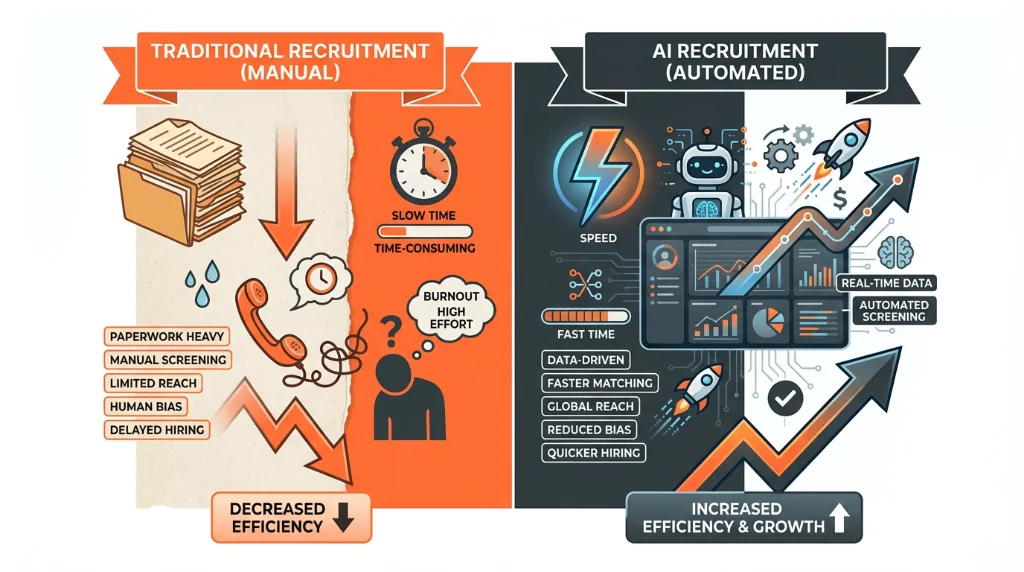
- Speed: AI can reduce the time-to-hire by up to 50%. This is crucial in a market where top talent is snapped up quickly.
- Quality: By using data and removing bias, companies make better hiring decisions. This leads to higher performance and lower turnover.
- Efficiency: Automating repetitive tasks allows HR teams to be more strategic. They can focus on workforce planning and employee engagement.
- Candidate Experience: Fast responses and personalized interactions make candidates feel valued, improving your employer brand.
Implementation Roadmap for 2026
If your company hasn’t started using AI in recruitment yet, don’t worry. It is not too late. Here is a simple roadmap to get started.
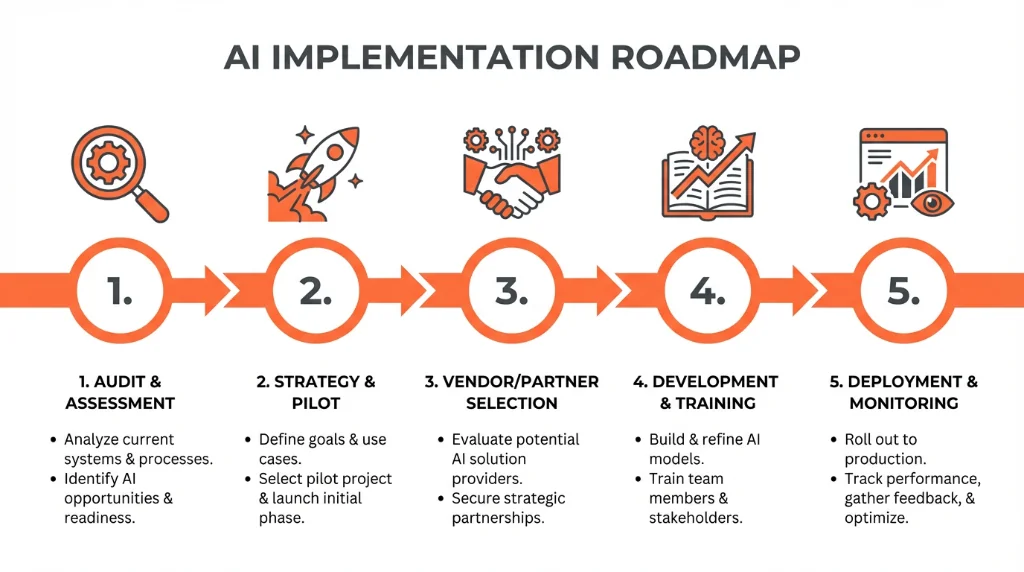
- Audit your current process to identify bottlenecks. Is it screening resumes? Scheduling interviews? Start by fixing the most significant pain point.
- Start small: Don’t try to change everything at once. Implement one tool, like an AI chatbot or a resume screening tool, and master it first.
- Choose the right partner: Work with recruitment partners who understand these technologies. For tech roles, consider our specialized technology recruitment services.
- Train your team: Ensure your HR staff understands how to use these tools and how to interpret the data.
- Monitor and adjust: Track your metrics. Is your time-to-hire going down? Is the quality of hires going up? Adjust your strategy based on the results.
Future Outlook
We are only scratching the surface of what is possible. In the future, we might see AI conducting full interviews in the metaverse or using biometric data to assess candidate suitability. However, one thing will remain constant: the need for human connection.
The goal of AI in recruitment is not to replace humans, but to make us more human. By reducing administrative burden, AI gives us time to connect with candidates truly, understand their aspirations, and help them build meaningful careers.
Transform Your Recruitment Strategy Today
Are you ready to leverage the power of AI to build your dream team? Corestaff combines cutting-edge technology with deep human expertise to deliver superior recruitment results. Contact us for an AI-powered recruitment consultation and stay ahead of the curve in 2026.
Get in touch with Corestaff: The Leading Singapore-Based Staffing and Recruitment Firm:
- Phone call: +65 6288 6866
- Email: recruit@corestaff.com.sg
- Address: 175A Bencoolen Street #11-05 Burlington Square Singapore 189650