
Key Takeaways
- Confidential executive search is used when a Singapore company must hire or replace a senior leader without alerting internal staff, competitors, or the market.
- The five most common trigger scenarios are silent replacement, restructure, M and A, board dispute, and executive director transition.
- The process typically runs 6 to 10 weeks in Singapore’s current market, using a retained search fee structure.
- The Corestaff differentiator is EA-licensed compliance (MOM Licence 18C9027), sector-specific market reach, and controlled candidate disclosure.
- A downloadable Confidential Executive Search Checklist is available at the end of this article.
Nearly every confidential executive search we run at Corestaff starts with a variation of the same question from the client: how do we replace this person without the team, the market, or the incumbent finding out?
That question is not paranoia. It is prudent risk management. When a senior leader is quietly on the way out, or when a company is preparing to bring in a new C-level hire without disrupting a live team, confidentiality is not a preference. It is the deliverable.
The five trigger scenarios
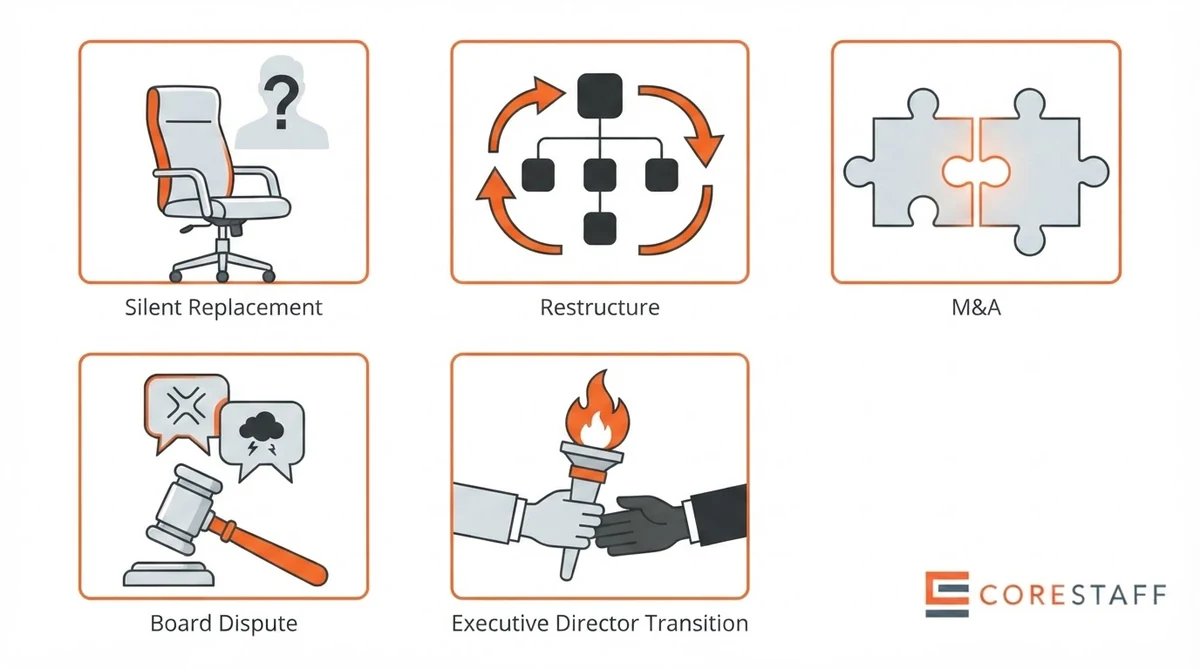
1. Silent replacement
The incumbent is still in the role and does not know they are being replaced. The company wants a successor identified and ready before any conversation happens. This is the classic confidential search.
2. Restructure
A restructure is planned but not announced. The company needs to know whether a viable external hire exists before finalising the new org chart. Confidentiality protects the workforce from destabilising leaks.
3. Merger or acquisition
The company is preparing for M and A. New leadership roles will be created but the deal is not yet announced. Confidential search identifies candidates for those roles ahead of the announcement.
4. Board dispute or governance issue
A board is preparing to move on an executive. Legal, HR, and search work in parallel. The search cannot surface publicly until the board is ready.
5. Executive director transition
A founder or long-tenured leader is stepping back. The transition must be smooth. Confidential search finds and vets the successor before the transition is announced to staff, investors, or media.
How a confidential search actually runs
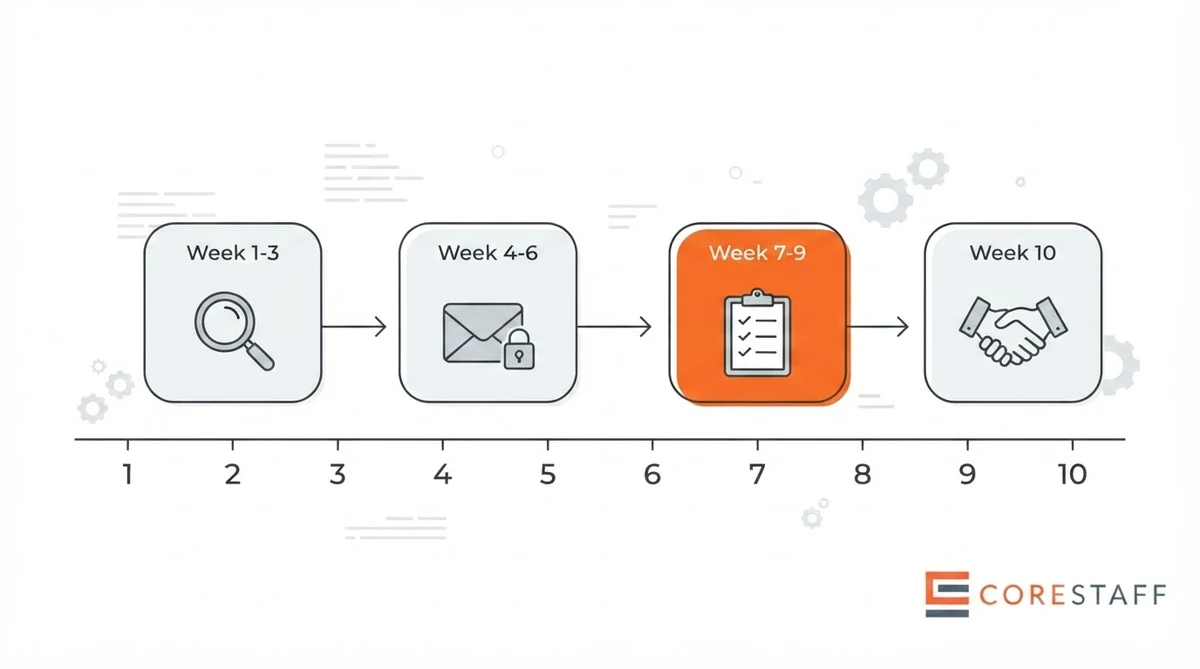
Week 1 to 2: Brief and market map
The client and the search consultant lock the role specification, target company list, and disclosure rules. We build the long list without using the client’s name in outreach.
Week 3 to 5: Confidential approach
Candidates are approached through anonymised briefs. Only the sector, size, geography, and general role scope are shared. The client’s name is disclosed only after mutual interest and an NDA are in place.
Week 5 to 7: Vetting
Behavioural interviews, technical assessment where relevant, and referencing (also confidential). Candidates never meet each other. Meetings are typically off-site.
Week 7 to 10: Close
Offer, negotiation, and start-date planning. The internal announcement to the client’s team is timed against the incumbent’s exit.
What makes a confidential search different from a retained search
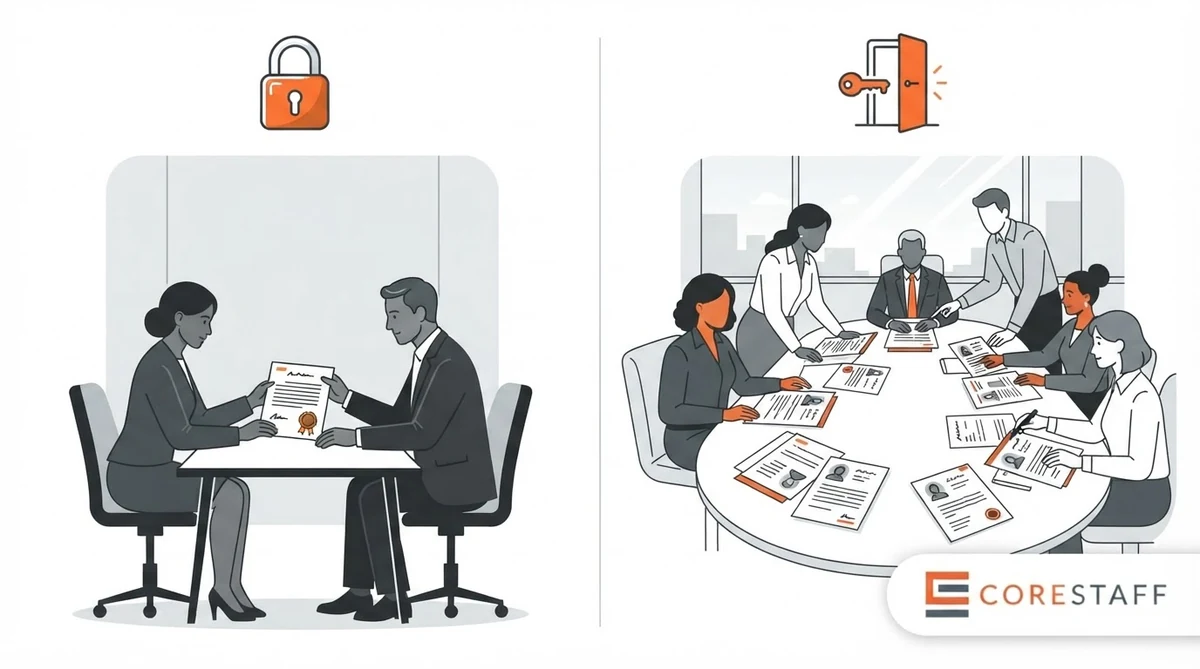
All confidential searches are retained. Not all retained searches are confidential. The distinction sits in three places.
- Client naming. A confidential search does not disclose the client name during outreach.
- Meeting logistics. Off-site interviews, encrypted document exchange, tightly controlled interviewer list.
- Reporting. Progress reporting is compartmentalised. Only named stakeholders on the client side receive it.
When confidential search is the wrong choice
Confidentiality has a cost. It restricts the candidate pool, extends timelines, and raises fees. For a public hire where the client’s name is a candidate magnet, a normal retained search is faster and cheaper. Confidential search should be reserved for the trigger scenarios above.
The Corestaff difference
Corestaff Pte Ltd is a MOM-licensed employment agency (EA Licence 18C9027) with a specialist executive search desk covering Singapore, regional Southeast Asia, and cross-border MD searches for overseas HQs entering the Singapore market. Our confidential search process is documented, auditable, and has been used for silent replacements, board-driven transitions, and pioneer team hires. Read more about our executive search practice and C-level hiring approach.
Bottom line
Confidential executive search exists because certain senior hires cannot be made in the open. If you are quietly considering a replacement, restructuring against a live team, or preparing for an M and A-driven leadership change, engaging a specialist search partner before you formalise the plan will save you weeks and protect the outcome.
Frequently asked questions
What is confidential executive search?
Confidential executive search is a retained recruitment process used when a Singapore company must hire or replace a senior leader without alerting internal staff, competitors, or the market. The client’s name is not disclosed during outreach.
When should a Singapore company use confidential search?
The five most common triggers are silent replacement of an incumbent, planned restructure, M and A-driven leadership hiring, board dispute or governance issue, and executive director transition.
How long does a confidential executive search take in Singapore?
Between 6 and 10 weeks from brief to signed offer in Singapore’s current market. Confidential searches typically run at the longer end of that range because the candidate pool is contacted more slowly.
How is confidential search different from retained search?
All confidential searches are retained. The difference is client naming (undisclosed during outreach), meeting logistics (off-site), and reporting (compartmentalised to named stakeholders).
Need Support with This Hire?
Corestaff is an MOM-licensed Singapore recruitment agency (Licence 18C9027) with dedicated practice areas in manufacturing, executive search, and technology.