
Employee turnover remains one of the most significant challenges facing Singapore businesses in 2026. With an average turnover rate of 18% across industries and replacement costs averaging 150-300% of an employee’s annual salary, retaining top talent has become a critical business imperative.
This comprehensive guide provides Singapore employers with actionable, cost-effective retention strategies across all dimensions: compensation, career development, workplace culture, management practices, and work-life balance. Whether you are an SME struggling with turnover or a large organization seeking to optimize retention, this guide from CoreStaff – a leading recruitment agency in Singapore – offers proven solutions.

The True Cost of Employee Turnover
Understanding the comprehensive costs of turnover is essential for building the business case for retention investments.
Direct Costs
- Recruitment expenses: Job advertising (SGD 500-2,000), recruitment agency fees (15-25% of annual salary), applicant screening time
- Onboarding and training: HR processing time, orientation programs, job-specific training, mentoring resources
- Productivity loss: New hire learning curve (typically 3-6 months to full productivity, depending on role complexity)
Indirect Costs (Often Underestimated)
- Knowledge loss: Institutional knowledge, client relationships, process expertise that departs with the employee
- Team morale impact: Remaining staff experience increased workload, may question their own tenure
- Customer satisfaction: Service continuity disruption, relationship rebuilding required
- Management time: Exit processing, interviews, training supervision (20-50 hours per replacement)
- Employer brand damage: High turnover impacts talent attraction and Glassdoor ratings
Cost Examples by Role Level
| Role Level | Annual Salary | Replacement Cost (% of salary) | Total Replacement Cost |
|---|---|---|---|
| Entry-level (Admin, Junior roles) | SGD 36,000 | 80-120% | SGD 28,000 – 43,000 |
| Mid-level (Executives, Specialists) | SGD 60,000 | 150-200% | SGD 90,000 – 120,000 |
| Senior (Managers, Technical experts) | SGD 120,000 | 200-300% | SGD 240,000 – 360,000 |
| Leadership (Directors, C-suite) | SGD 200,000+ | 300-400% | SGD 600,000 – 800,000+ |
ROI of Retention Investment
Consider a company with 100 employees, 18% annual turnover, average salary SGD 60,000:
- Annual departures: 18 employees
- Average replacement cost: SGD 90,000 per employee (150% of salary)
- Total annual turnover cost: SGD 1,620,000
If retention strategies reduce turnover by just 30% (from 18% to 12.6%):
- Prevented departures: 5.4 employees
- Annual savings: SGD 486,000
- This budget can fund: Comprehensive development programs, retention bonuses, engagement initiatives, and competitive salary adjustments while still generating significant savings
Understanding Your Turnover: Analytics and Insights

Effective retention begins with understanding why employees leave. Implement systematic turnover analytics:
Key Retention Metrics to Track
1. Overall Turnover Rate
- Formula: (Number of departures / Average number of employees) x 100
- Benchmark: Singapore average 15-20% (varies by industry)
- Track: Monthly and annual trends
2. Voluntary vs Involuntary Turnover
- Voluntary: Employee-initiated resignations (focus area for retention strategies)
- Involuntary: Terminations, redundancies (separate analysis required)
- Target: Voluntary turnover should be <10% for healthy organizations
3. Turnover by Department/Function
- Identify high-turnover departments requiring targeted interventions
- May indicate specific management, workload, or culture issues
- Compare to industry benchmarks by function
4. Turnover by Tenure
- 0-6 months: High early turnover indicates hiring/onboarding issues
- 1-2 years: Career development and engagement challenges
- 3-5 years: Compensation competitiveness and advancement opportunities
- 5+ years: Generally low; if elevated, investigate organizational change fatigue
5. Regrettable vs Non-Regrettable Turnover
- Regrettable: High performers you wanted to retain (critical loss)
- Non-regrettable: Low performers or poor culture fit (acceptable attrition)
- Focus: Retention strategies should target reducing regrettable turnover specifically
6. Flight Risk Indicators
- Reduced engagement scores in surveys
- Declining performance or initiative
- Updated LinkedIn profiles or reduced workplace presence
- Salary below market rate for extended period
- Passed over for promotion multiple times
Exit Interview Best Practices
Conduct structured exit interviews to understand true departure reasons:
- Timing: During notice period (1-2 weeks before last day for candid feedback)
- Interviewer: HR or neutral party (not direct manager) to encourage honesty
- Format: Semi-structured interview with standardized core questions plus open discussion
- Key questions:
- What prompted you to start looking for opportunities elsewhere?
- What could the company have done differently to retain you?
- How would you describe the management and work environment?
- Did you feel your career was progressing appropriately?
- How does your new opportunity compare (role, compensation, development)?
- Analysis: Quarterly review of exit interview themes to identify systemic issues
Comprehensive Retention Strategies for 2026
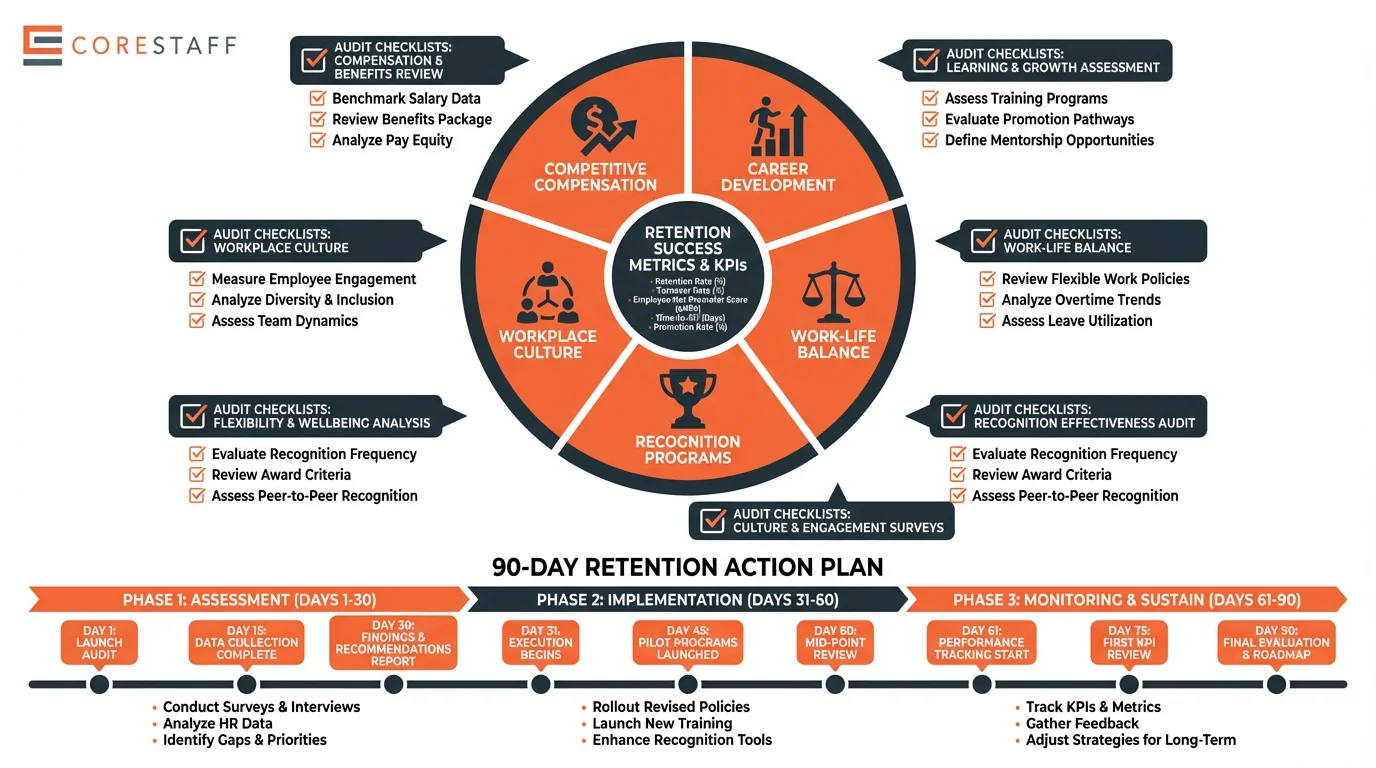
Strategy 1: Competitive and Fair Compensation
While not the sole factor, compensation remains foundational to retention. Employees will tolerate below-market salaries for a time, but not indefinitely.
Salary Benchmarking and Market Alignment
- Annual benchmarking: Review salary competitiveness against market at least annually
- Data sources: Recruitment consultants, salary surveys (Robert Half, Hays, Kelly Services), government data (MOM)
- Target positioning: Aim for 50th-75th percentile for critical roles; 40th-60th percentile acceptable for non-critical roles
- Adjustments: Proactive market adjustments prevent employees from needing to resign to get competitive pay
Pay Equity and Transparency
- Internal equity: Ensure similar roles at similar levels receive comparable compensation
- Salary bands: Establish clear salary ranges for each position level
- Transparency: Communicate how salary decisions are made (even if specific figures remain confidential)
- Regular reviews: Structured annual reviews with clear criteria (performance, tenure, market movement)
Performance-Based Variable Compensation
- Annual bonus: 0.5-3 months depending on company and individual performance
- Quarterly incentives: For roles with measurable KPIs (sales, operations, customer service)
- Profit-sharing: Align employee rewards with company success
- Clear metrics: Transparent performance criteria and payout calculations
Retention Bonuses
- Strategic use: For critical employees at flight risk or during critical project periods
- Structure: Lump sum (e.g., 1-2 months salary) paid upon completing defined retention period
- Vesting schedule: Pro-rated over 12-24 months with clawback if employee leaves early
- Typical scenarios: Key project completion, industry poaching risk, organizational change periods
Non-Monetary Compensation
- Comprehensive benefits: Medical insurance, dental, wellness programs, gym memberships
- Flexible benefits: Allow employees to choose benefit mix that suits their life stage
- Financial wellness: CPF top-ups, financial planning support, insurance benefits
- Perks: Transport allowance, meal subsidies, mobile phone plans, professional memberships
Strategy 2: Career Development and Growth Opportunities

Singapore’s 2025 Labour Force Survey found that 68% of job changers cited limited career growth as a primary reason for leaving. Comprehensive development programs are no longer optional.
Clear Career Pathways
- Career ladders: Document advancement paths for every role (e.g., Junior Analyst → Analyst → Senior Analyst → Lead Analyst → Manager)
- Competency frameworks: Define skills/experiences required for each level
- Timeline guidance: Realistic timeframes for progression (e.g., 18-24 months per level for strong performers)
- Multiple tracks: Offer both management and individual contributor specialist paths
- Transparency: Communicate career frameworks during onboarding and annual reviews
Individual Development Plans (IDPs)
- Annual IDP creation: Collaborative process between employee and manager
- Components: Career goals (1, 3, 5 years), skill gaps to address, development activities, timeline, resources needed
- Quarterly reviews: Track IDP progress during regular check-ins
- Accountability: Both employee and manager have defined responsibilities
Training and Upskilling Programs
- Skills training: Job-specific technical training (software, methodologies, industry knowledge)
- Soft skills: Communication, leadership, project management, presentation skills
- External courses: Fund industry certifications, professional qualifications, university programs
- Budget allocation: SGD 2,000-5,000 per employee annually for development
- SkillsFuture credits: Encourage employees to utilize government training credits
Mentorship and Coaching
- Formal mentorship programs: Pair junior employees with senior mentors for guidance
- Cross-functional mentorship: Expose employees to other business areas
- External coaching: For high potentials and senior leaders (executive coaching)
- Reverse mentoring: Junior employees mentor senior leaders on technology, trends
Job Rotation and Stretch Assignments
- Lateral moves: Allow transfers to different departments for skill broadening
- Project assignments: Temporary assignments to cross-functional projects
- Acting roles: Temporary coverage of higher-level roles for development
- International assignments: For regional/global companies, offer overseas exposure
Internal Promotion Priority
- Policy: Prioritize internal candidates for open positions before external recruitment
- Internal job postings: Advertise vacancies internally 1-2 weeks before external posting
- Transparent selection: Clear criteria and feedback for internal applicants (whether successful or not)
- Message: Demonstrates company’s commitment to employee growth and career investment
Strategy 3: Effective Management and Leadership
The adage “employees don’t leave companies, they leave managers” holds substantial truth. Quality of direct management significantly impacts retention.
Manager Training and Development
- First-time manager training: Comprehensive program for new supervisors (feedback, coaching, performance management, employment law)
- Ongoing development: Annual refresher training on management best practices
- Leadership development: Advanced programs for senior managers (strategic thinking, change management, organizational leadership)
- Accountability: Manager performance evaluation includes people management KPIs (retention, engagement, development)
Regular One-on-One Meetings
- Frequency: Minimum bi-weekly 30-minute meetings between manager and direct report
- Structure: Employee-driven agenda (challenges, needs, career discussions, project updates)
- Documentation: Meeting notes and action items tracked
- Consistency: These meetings are protected time, not cancelled for other priorities
- Benefit: Builds relationship, surfaces issues early, demonstrates investment in employee
Continuous Feedback Culture
- Real-time feedback: Provide praise and constructive feedback in the moment, not just annual reviews
- Specific and actionable: Feedback focused on behaviors and outcomes with clear guidance
- Two-way dialogue: Encourage employees to provide upward feedback to managers
- Recognition: Regularly acknowledge good work (public recognition in meetings, written appreciation)
Fair and Transparent Performance Management
- Clear expectations: Well-defined KPIs and performance standards set at year start
- Regular check-ins: Quarterly performance discussions (not just annual review)
- Balanced evaluation: Assess both results achieved and behaviors/competencies demonstrated
- Constructive improvement plans: Support underperformers with clear development plans before punitive action
- Calibration: Cross-manager calibration sessions to ensure rating consistency
Employee Voice and Participation
- Open-door policy: Senior management accessibility for employee concerns
- Town halls: Regular all-hands meetings for updates and Q&A
- Suggestion schemes: Formal channels for employees to propose improvements (with recognition/rewards for implemented ideas)
- Employee committees: Cross-functional groups for workplace initiatives (wellness, CSR, social events)
Strategy 4: Positive Workplace Culture and Environment
Define and Live Core Values
- Articulate values: Clear company values (e.g., integrity, collaboration, innovation, customer focus)
- Behavioral examples: Define what each value looks like in practice
- Integration: Values incorporated in recruitment, onboarding, performance evaluation, recognition
- Leadership modeling: Senior leaders visibly demonstrate values in decisions and behavior
Inclusive and Respectful Environment
- Diversity and inclusion: Proactive efforts to build diverse teams and inclusive practices
- Anti-discrimination: Zero tolerance for harassment, discrimination, bullying
- Psychological safety: Environment where employees feel safe to speak up, take risks, admit mistakes
- Conflict resolution: Fair mechanisms to address interpersonal conflicts professionally
Team Cohesion and Social Connection
- Team building: Regular team activities (quarterly outings, project celebrations, festive events)
- Cross-team interaction: Company-wide events fostering broader connections
- Welcome rituals: Structured onboarding and buddy systems for new hires
- Milestone celebrations: Acknowledge birthdays, work anniversaries, life events
Recognition and Appreciation Programs
- Formal awards: Employee of the month/quarter with tangible rewards (bonus, vouchers, trophies)
- Peer recognition: Platforms where colleagues can recognize each other (kudos systems, appreciation boards)
- Service awards: Recognition for tenure milestones (5, 10, 15 years with tangible gifts)
- Spot bonuses: On-the-spot cash awards for exceptional contributions (SGD 200-500)
Physical Workspace Quality
- Comfortable facilities: Ergonomic furniture, adequate lighting, temperature control
- Collaborative spaces: Meeting rooms, breakout areas, quiet zones
- Amenities: Pantry facilities, rest areas, lockers, wellness rooms
- Modern technology: Up-to-date equipment and software tools
Strategy 5: Work-Life Balance and Flexibility
Post-COVID, employee expectations around flexibility have permanently shifted. Organizations offering flexibility enjoy significant retention advantages.
Flexible Work Arrangements
- Hybrid work: 2-3 days in office, 2-3 days remote (where role permits)
- Flexible hours: Core hours (10am-4pm) with flexibility on start/end times
- Compressed workweeks: 4.5-day weeks or 9-day fortnights where feasible
- Remote work options: Fully remote for roles where physical presence not required
- Policy clarity: Clear guidelines on eligibility, expectations, and performance measurement
Leave Policies
- Generous annual leave: Above statutory minimum (e.g., 18-21 days vs 7-14 days minimum)
- Leave progression: Additional days with tenure (e.g., +1 day per 3 years)
- Parental leave: Enhanced maternity/paternity beyond statutory minimums
- Special leave: Marriage, compassionate leave, medical appointments, volunteer days
- Sabbaticals: Extended leave options for long-tenured employees (3-6 months after 5-10 years)
Workload Management
- Realistic expectations: Workload assessments to prevent chronic overwork
- Overtime monitoring: Track overtime hours; intervene if consistently excessive
- Resource allocation: Adequate staffing and support for teams
- Prioritization support: Managers help employees prioritize when demands are high
- No “always-on” culture: Discourage after-hours emails except true emergencies
Wellness Programs
- Physical wellness: Gym subsidies, fitness challenges, health screenings
- Mental health: Employee Assistance Programs (EAP), counseling services, mental health days
- Financial wellness: Financial planning workshops, retirement planning support
- Holistic wellbeing: Mindfulness sessions, yoga classes, ergonomics assessments
Targeted Retention Strategies by Employee Tenure
0-6 Months: Effective Onboarding
Challenge: High early turnover often indicates poor hiring fit or inadequate onboarding.
- Pre-boarding: Maintain engagement between offer acceptance and start date (welcome emails, company materials, IT setup completion)
- Structured onboarding: 90-day plan covering company orientation, role training, relationship building
- Buddy system: Assign experienced peer mentor for first 3 months
- Regular check-ins: Weekly meetings with manager for first month; bi-weekly for months 2-3
- 30-60-90 day reviews: Formal checkpoints to address concerns and align expectations
- Early wins: Assign achievable projects that build confidence and demonstrate value
6 Months – 2 Years: Engagement and Development
Challenge: Once initial learning curve is complete, employees seek growth and variety.
- Skill development: Training opportunities and professional development funding
- Increasing responsibility: Gradually expand project scope and autonomy
- Cross-exposure: Involve in cross-functional projects or secondments
- Career conversations: Explicit discussions about career goals and paths (6-month and annual reviews)
- Recognition: Acknowledge contributions and growing capabilities
2-5 Years: Career Progression
Challenge: Employees expect visible career advancement and increased compensation.
- Promotion readiness: Active development toward next level (stretch assignments, leadership opportunities)
- Compensation reviews: Market adjustments to prevent salary stagnation
- Leadership development: Management training if on leadership track
- Specialization paths: Deep expertise development in technical/functional areas
- Retention conversations: Proactively discuss long-term career fit and mutual commitment
5+ Years: Renewal and Recognition
Challenge: Long-tenured employees may experience stagnation or outside competitive offers.
- Senior roles: Movement into leadership, specialist, or strategic project roles
- Sabbaticals: Refresh opportunities (3-6 month breaks after major milestones)
- Mentorship roles: Formal mentorship of junior staff
- Long service recognition: Tangible appreciation for tenure (bonuses, awards, additional leave)
- Knowledge transfer: Involve in strategy, training development, process improvement initiatives
- Succession planning: Clear discussions about next-level opportunities or alternative career paths
How CoreStaff Supports Your Retention Strategy
While CoreStaff specializes in recruitment, we recognize that retention is equally critical. Our services support your retention efforts through strategic hiring and organizational capability building.
Quality Hiring Reduces Early Turnover
- Cultural fit assessment: We evaluate candidates not just for skills but for alignment with your company culture and values
- Thorough screening: Comprehensive reference checks and background verification reduce hiring mistakes
- Realistic job previews: We ensure candidates have accurate expectations about role and company, reducing post-hire disillusionment
- Market intelligence: Provide salary benchmarking data to ensure your offers are competitive, supporting retention from day one
Replacement Services When Turnover Occurs
- Fast replacement: Minimize productivity disruption with expedited recruitment for critical departures
- Succession planning support: Help build internal talent pipelines to fill key roles from within
- Exit interview insights: Share broader market trends and departure reasons we observe across clients
Consultation on Talent Strategy
- Compensation benchmarking: Regular market data on salary trends by role and industry
- Talent retention best practices: Share insights from our work with 200+ Singapore companies
- Organizational capability: Advise on building internal recruitment and talent management capabilities
Contact CoreStaff to discuss how strategic recruitment practices can support your broader talent retention objectives. Learn more about our comprehensive recruitment services.
Build a Retention-Focused Organization with CoreStaff
Employee retention is not a single initiative but a comprehensive organizational commitment spanning compensation, development, culture, management quality, and work-life balance. With turnover costs averaging 150-300% of annual salary, strategic investment in retention delivers substantial ROI.
While CoreStaff’s core expertise is recruitment, we understand that hiring excellence is only part of talent strategy. By partnering with us for strategic, quality hiring, you reduce early turnover and build a foundation for long-term retention success.
Contact CoreStaff for Recruitment Excellence
Speak with our recruitment specialists about hiring practices that support retention:
- Cultural fit assessment methodologies
- Salary benchmarking for competitive offers
- Comprehensive candidate screening to reduce mis-hires
- Market intelligence on talent trends and retention drivers
Contact CoreStaff Today
Phone: +65 6288 6866
Email: recruit@corestaff.com.sg
Website: www.corestaff.com.sg
Address: 175A Bencoolen Street, #11-05 Burlington Square, Singapore 189650