
Manufacturing employers have a narrow window in Q4 2026. The current levy tiers still apply, the 2027 salary floors are already announced, and the next round of levy increases is known but not yet imposed. That combination makes this quarter the best time in two years to restructure a headcount plan, because you can still move with the numbers in front of you rather than behind you.
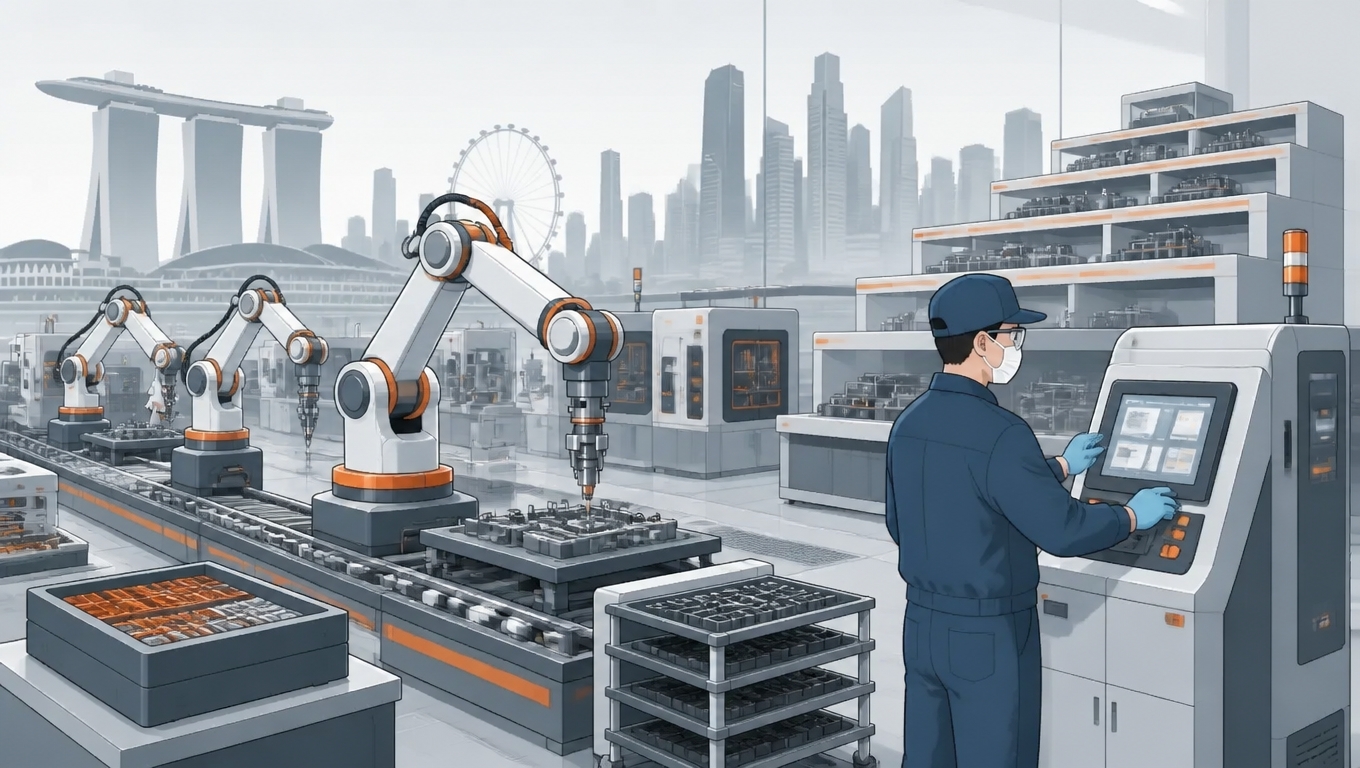
This is a cost outlook, not a salary survey. It sets out the levies and floors that decide manufacturing hiring cost, and points to the gated brief that carries the fuller picture. For the sector’s hiring side, see our manufacturing recruitment services. Our Singapore employment agency hires to these bands through its manufacturing recruitment team, and can benchmark your plant against comparable employers in the sector.
Where manufacturing sits on quota and levy

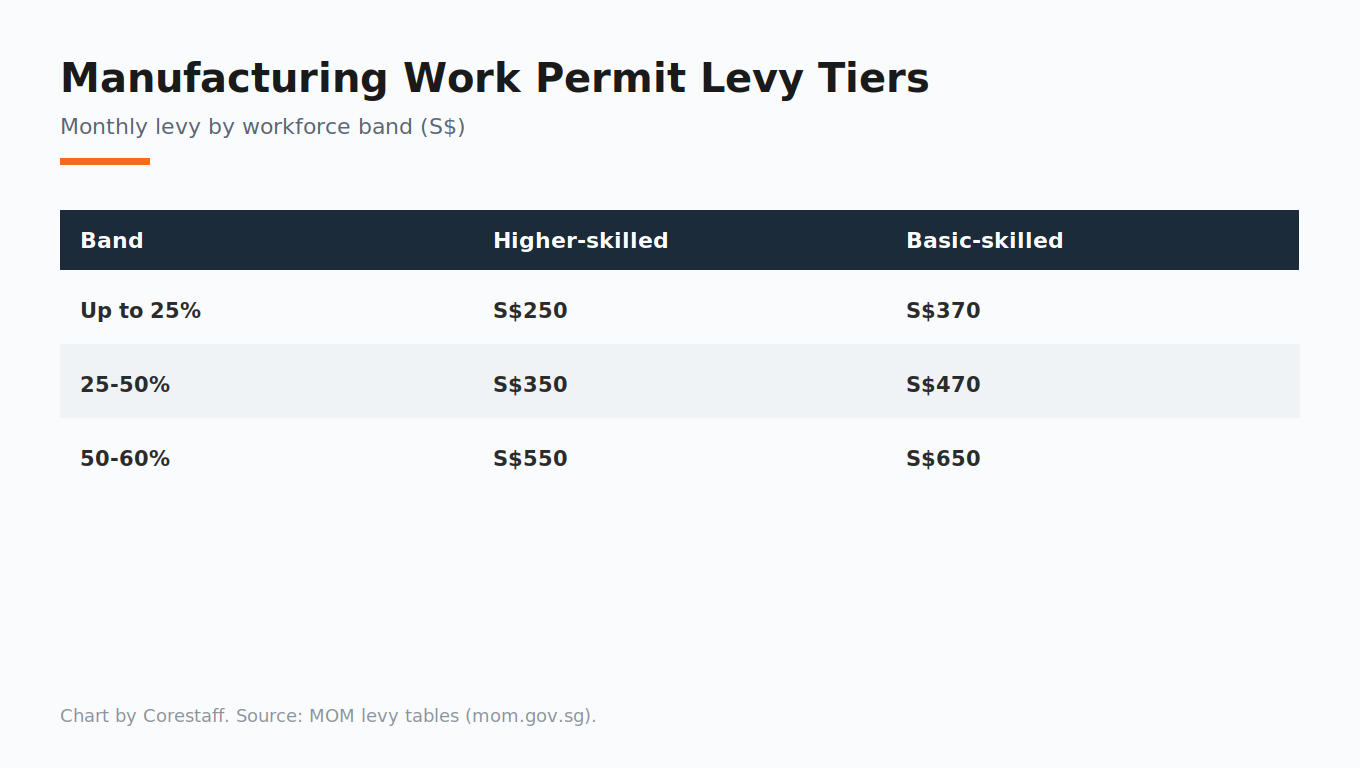
Manufacturing runs to a 60 per cent Dependency Ratio Ceiling, with a 25 per cent sub-quota for workers from the PRC. The monthly Work Permit levy steps up as your higher-skilled share moves through the bands, which means your levy bill is a function of your workforce mix, not only its size.
| Workforce band | Higher-skilled | Basic-skilled |
|---|---|---|
| Up to 25% | S$250 | S$370 |
| Above 25% to 50% | S$350 | S$470 |
| Above 50% to 60% | S$550 | S$650 |
The practical consequence is that a plant at 40 per cent foreign share and a plant at 55 per cent can pay very different amounts for the same number of workers. Restructuring the mix, rather than cutting the headcount, is often the cheaper lever.
The 2028 step change you should price now
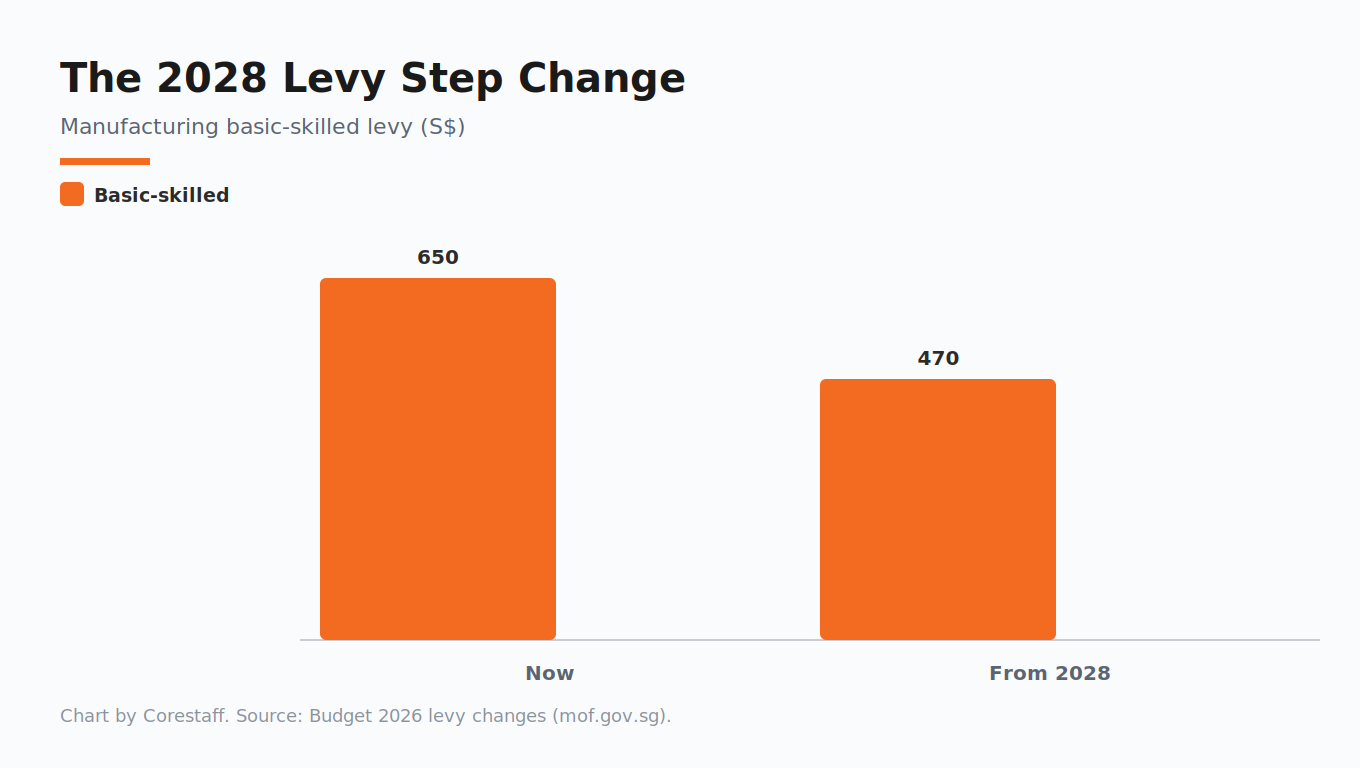
From 2028, Manufacturing basic-skilled levy sits at S$470 and higher-skilled at S$300 under the announced Budget 2026 changes, with Process rising by S$150 for basic-skilled and Marine Shipyard by S$100. Employers signing multi-year headcount plans today should stress-test them against these numbers rather than the current ones, because a plan that clears today’s levy can break on the 2028 line.
The 2027 floors touch manufacturing too
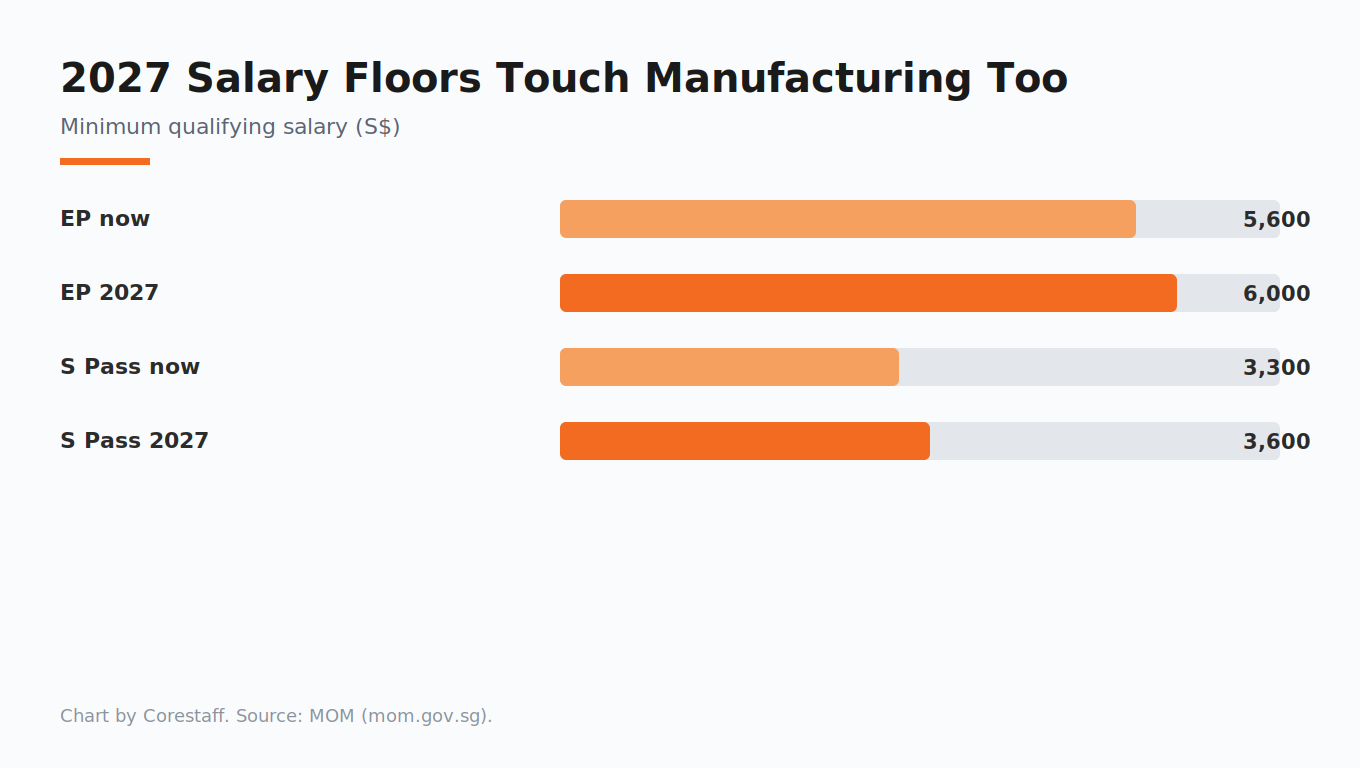
Manufacturing employers who hold S Pass or Employment Pass staff face the same January 2027 threshold movement as every other sector: EP from S$5,600 to S$6,000 and S Pass from S$3,300 to S$3,600 for new applications, with renewals tested from 1 January 2028. A manufacturing roster that mixes Work Permit, S Pass and EP exposure carries three separate planning problems at once, which is why the exposure review in our 2027 thresholds guide matters as much in a factory as in an office.
The Progressive Wage Credit Scheme is the offset
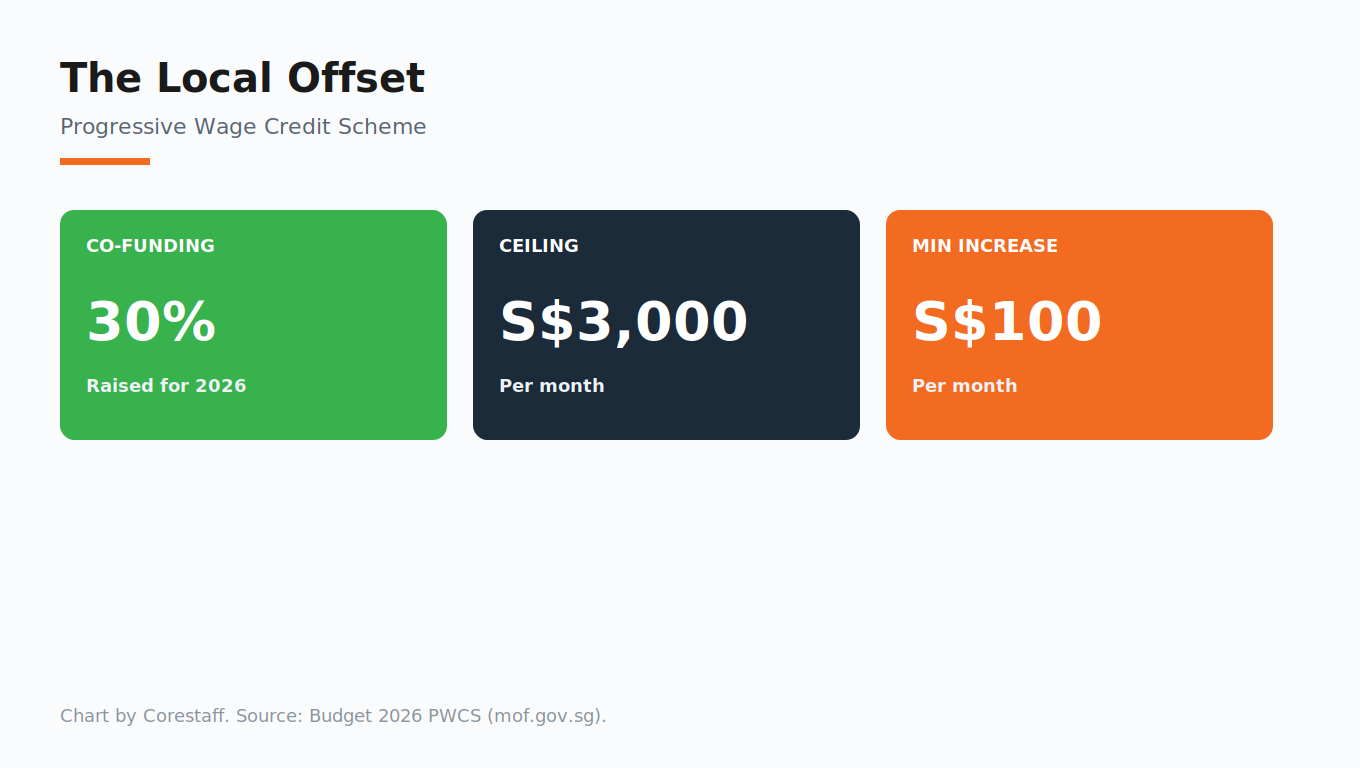
For local employees, the Progressive Wage Credit Scheme co-funds wage increases, with the co-funding rate raised to 30 per cent for 2026 and a monthly ceiling of S$3,000. The minimum increase qualifying for support is S$100 a month, and payouts land from March 2026. Employers planning local upskilling alongside foreign-worker restructuring should factor the credit into the net cost, because it changes the arithmetic in favour of a mixed workforce.
A worked Q4 budget for a 120-worker plant
Imagine a plant with 120 production workers, of which 70 are Work Permit holders sitting in the 25 to 50 per cent band. The monthly levy on that group can run from roughly S$24,500 to S$32,900 depending on the skilled split. Re-band ten basic-skilled workers to higher-skilled and the same headcount drops into a materially lower levy, while also improving your position ahead of the 2028 increase. Set that saving against the upskilling cost and the case is usually clear within one budget cycle.
What to do before 31 December 2026
- Map your band. Know which levy tier your current foreign share places you in, plant by plant.
- Model 2028. Stress-test the plan against the announced levy increases, not today’s rates.
- Split the pass mix. Treat Work Permit, S Pass and EP exposure as three separate budget lines.
- Price the PWCS offset. Include the 30 per cent co-funding on local wage increases in the net cost.
Download the manufacturing cost brief
The Q4 2026 manufacturing cost brief sets out levy tiers, the 2028 step change, the 2027 floors and the PWCS offset in one gated document.
Frequently asked questions
When do the next manufacturing levy increases apply?
The announced increases apply from 2028, which gives employers a Q4 2026 window to plan before the step change.
What is the manufacturing sub-quota for PRC workers?
It is 25 per cent, within the wider 60 per cent Dependency Ratio Ceiling.
Does the PWCS offset foreign-worker costs?
No. The Progressive Wage Credit Scheme co-funds wage increases for local employees, so it offsets restructuring cost only where locals are upskilled.
Is the levy the same regardless of my workforce mix?
No. The monthly levy rises with your higher-skilled share through the bands, so the mix changes the bill even when the headcount does not.
Related reading
Talk to Corestaff about this
Corestaff Pte Ltd is a Singapore employment agency, a trusted hiring partner since 2015, holding Employment Agency Licence 18C9027 under UEN 201633744E. If you want this article applied to your own workforce, our consultants will model it with you.
- Call: +65 6288 6866
- Email: recruit@corestaff.com.sg
- Visit: 175A Bencoolen Street, #11-05 Burlington Square, Singapore 189650
- Send a brief: Contact Corestaff · corestaff.com.sg