
Navigating the complexities of aviation staffing can feel like piloting through a storm, yet mastering this critical area is key to operational excellence.
This article will comprehensively understand the current aviation workforce, detailing the challenges and presenting strategic solutions. We will explore how flexible recruitment approaches, robust talent pipelines, and cutting-edge insights can help your organization thrive.

Key Takeaways
- The aviation sector faces a critical talent shortage across various roles, driven by an aging workforce and increasing demand.
- Specialized roles like pilots, mechanics, and air traffic controllers are in high demand, requiring unique recruitment strategies.
- Technological advancements and sustainability initiatives are reshaping job requirements and creating new opportunities.
- Strategic partnerships with expert recruitment agencies offer agile and effective solutions for complex aviation staffing needs.
- Investing in training, development, and a strong employer brand is crucial for attracting and retaining top talent.
Navigating the Skies of Talent: Understanding Current Aviation Staffing Challenges
The global aviation industry is experiencing unprecedented growth, but this expansion comes with significant aviation staffing hurdles. Airlines, airports, and aerospace manufacturers grapple with a persistent talent shortage. This shortage impacts crucial operational roles and threatens long-term stability across the sector.
We’re seeing a perfect storm of factors converging to create these challenges. Many experienced professionals are nearing retirement, while the pipeline of new talent struggles to keep pace. This means a vital loss of institutional knowledge and skilled hands.
The Looming Talent Gap: A Critical Industry Concern
The statistics paint a clear picture of this critical gap in aviation staffing. Boeing’s 2025 Pilot and Technician Outlook (PTO) predicts a staggering demand for 2.37 million new personnel globally by 2044. This includes hundreds of thousands of new pilots, maintenance technicians, and cabin crew members, essential for sustaining global commercial fleets.
Similarly, the CAE’s 2023 Aviation Talent Forecast estimated a need for 1.3 million civil aviation professionals within a decade. These figures highlight the immense pressure on the industry to attract, train, and retain a vast workforce. Without these skilled individuals, the entire ecosystem faces significant operational disruptions.
An Ageing Workforce and Evolving Expectations
One major contributor to the aviation staffing crisis is the advancing age of the current workforce. Many seasoned professionals are at or approaching retirement, leading to a significant wave of departures. This natural attrition depletes the pool of experienced talent faster than new recruits can be fully trained.
Beyond retirements, younger generations have evolving career expectations, often seeking greater flexibility and work-life balance. The perceived high costs and time commitments associated with aviation roles, such as becoming a pilot, can deter potential candidates. Attracting this new generation requires adapting traditional recruitment strategies.
Competition from Other Industries
The aviation sector faces stiff competition from other industries, particularly technology, for skilled workers. Fields offering high-tech roles and competitive compensation often draw talent away from aviation’s specialized technical positions, making aviation staffing even more challenging.
Many qualified individuals might choose careers in other sectors, seeing faster career progression or different work environments. This means the aviation industry must enhance its value proposition to stand out. It’s about more than just a job; it’s about a compelling career path.
The Lingering Impact of the Pandemic
While global air travel has largely rebounded, the COVID-19 pandemic left a lasting mark on aviation staffing. The dramatic reduction in demand for aviation services during the pandemic forced many professionals to seek opportunities in other industries, draining an already sensitive talent pool.
Refilling these roles has been a slow process, with training pipelines struggling to keep pace with renewed demand. The industry must rebuild confidence and clearly communicate the long-term stability and growth opportunities. We must emphasize the positive outlook for those entering the field.
Essential Roles Fueling Flight: Specialized Talent in Aviation Staffing
The aviation industry relies on a diverse array of specialized professionals to maintain safety, efficiency, and innovation. From the cockpit to the control tower, and from hangers to passenger terminals, each role is indispensable. Understanding these critical needs is fundamental to effective aviation staffing. It’s about recognizing the unique demands of each position.
Pilots: The Command Center of the Skies
Pilots are undoubtedly one of the most visible and critical roles in aviation staffing. Commercial airline pilots, corporate pilots, and flight instructors all require extensive training, rigorous certification, and significant experience. The global demand for these professionals continues to surge.
Boeing projects a need for hundreds of thousands of new pilots globally through 2044. This ongoing demand puts immense pressure on training programs and recruitment efforts. Regional airlines, in particular, often struggle to attract and retain enough qualified pilots.
Aircraft Mechanics and Engineers: The Backbone of Safety
Maintaining the world’s aircraft fleet requires a dedicated and highly skilled workforce of aircraft mechanics and aerospace engineers. These professionals perform routine inspections, complex repairs, and crucial maintenance on engines, systems, and structures. Their work directly impacts flight safety and operational readiness.
The deficit of aviation mechanics is a serious concern, with the United States alone facing a significant shortfall projected to widen. Engineers specialize in designing new aircraft, improving existing ones, and working on advanced electronic systems like navigation and communication equipment. Finding these skilled trades remains a top priority in aviation staffing.
Air Traffic Controllers: Orchestrating the Airways
Air traffic controllers play an absolutely vital role, guiding aircraft during takeoff, landing, and throughout their flights. This high-pressure job demands exceptional communication skills, quick decision-making, and unwavering attention to detail. Without them, the sky’s complex dance becomes chaotic.
The industry faces a pressing need for more air traffic controllers, a role that also requires specialized training and certification. Ensuring a steady supply of these professionals is paramount for managing increasing air travel volumes safely. It’s a job that keeps everyone safe in the air.
Cabin Crew and Ground Staff: The Face of Aviation
While often overlooked in discussions of technical shortages, cabin crew and ground staff are equally essential for smooth operations and passenger experience. Cabin crew ensure passenger safety and comfort, while ground staff handle everything from baggage and cargo to check-in and gate operations. These roles are crucial touchpoints for travelers.
Airport staffing issues, including shortages of baggage handlers, security staff, and customer service representatives, can lead to longer wait times and operational inefficiencies. These frontline positions are critical for delivering a positive travel experience. They represent the human element of air travel.
Strategic Solutions for Workforce Agility: Mastering Aviation Staffing
Addressing the multifaceted challenges in aviation staffing requires a proactive and strategic approach. Organizations must move beyond traditional recruitment methods and embrace innovative solutions. The goal is to build a resilient, adaptable workforce that meets current demands and future growth. This is where strategic thinking truly pays off.
Embracing Flexible Staffing Models
The growing demand for skilled professionals, coupled with project-based needs and seasonal fluctuations, makes flexible staffing models incredibly valuable. Temporary and contract staffing allow aviation businesses to scale their workforce up or down as required. This provides essential agility without the long-term commitment of permanent hires.
For instance, during peak travel seasons or for specific maintenance projects, temporary staff can fill critical gaps. Our specialized temporary and contract staffing services help businesses manage these fluctuating needs effectively. We ensure you have the right talent exactly when you need it.
Investing in Training and Development Pipelines
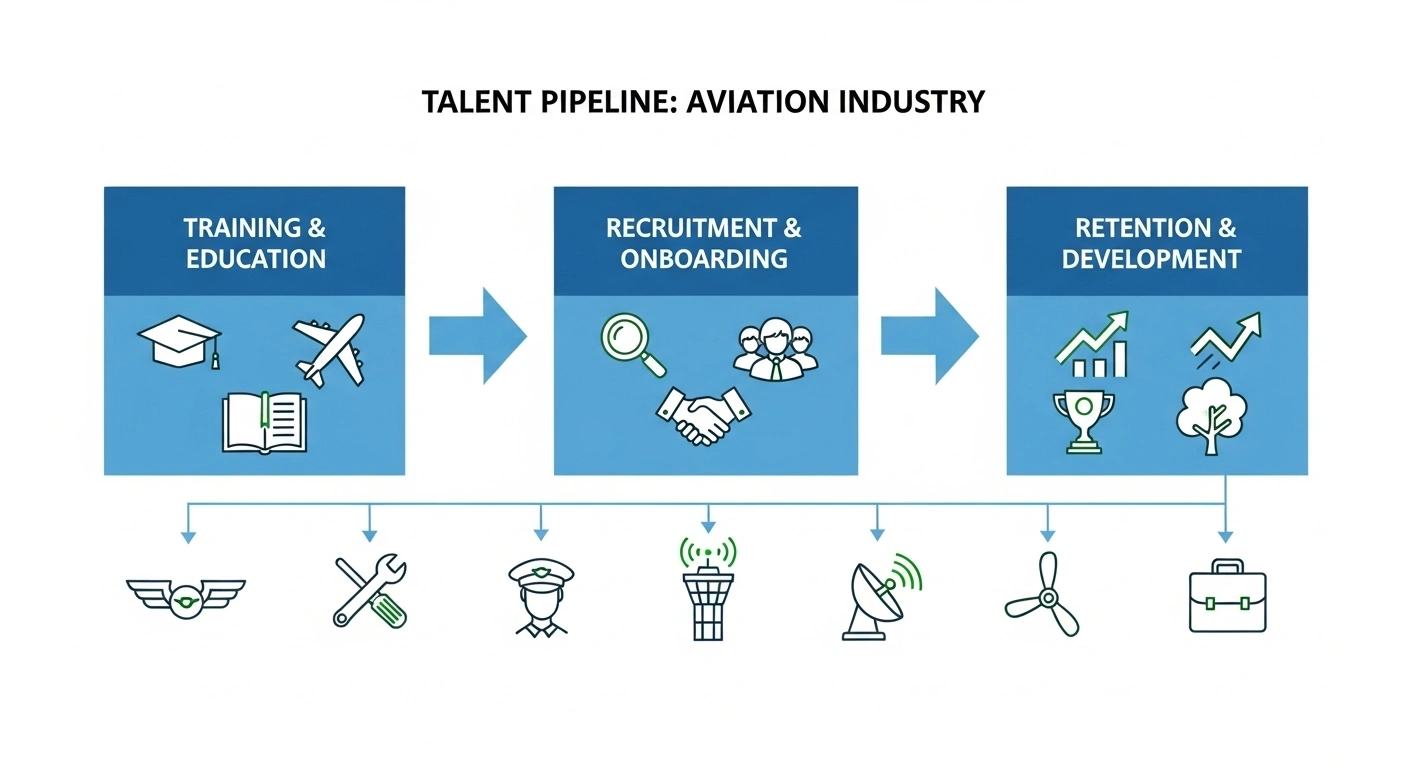
To combat the talent shortage, the aviation industry must significantly invest in robust training and development pipelines. This means partnering with educational institutions and offering apprenticeships to nurture future talent. Developing clear career pathways can attract younger generations.
Airlines and maintenance organizations already invest in specialized training programs to address skill gaps. These initiatives not only upskill existing employees but also make aviation careers more accessible and attractive to new entrants. It’s about building a sustainable future.
Leveraging Technology in Recruitment and Operations
Technology offers powerful tools for enhancing aviation staffing efficiency and effectiveness. AI-driven sourcing platforms can identify suitable candidates faster, while advanced analytics can predict future workforce needs. Embracing digital tools streamlines the entire recruitment process.
Furthermore, within operations, automation and artificial intelligence are revolutionizing processes from predictive maintenance to flight management. These advancements also create new roles requiring different skill sets, such as specialists in AI integration and data analysis. Our technology recruitment services focus on sourcing top-tier developers and IT project managers to support these innovative advancements within organizations.
Cultivating an Inclusive and Diverse Workforce
Prioritizing diversity and inclusion is not just a moral imperative; it’s a strategic advantage for aviation staffing. Encouraging underrepresented groups to pursue aviation careers fosters innovation and creates a more dynamic workforce. A diverse team brings a broader range of perspectives and skills.
Initiatives that proactively engage with schools and diverse communities can increase awareness about aviation careers. A welcoming and inclusive culture helps retain talent, creating an environment where everyone can thrive. This builds a stronger, more resilient industry.
Future-Proofing Your Crew: Embracing Innovation in Aviation Staffing
The aviation industry is poised for significant transformation, driven by technological advancements and global sustainability goals. To remain competitive and ensure long-term success, organizations must proactively future-proof their aviation staffing strategies. It’s about looking ahead and preparing today for tomorrow’s needs. This involves anticipating emerging trends and adapting accordingly.
The Rise of Sustainable Aviation Roles
With a heightened global focus on environmental responsibility, the aviation industry is rapidly moving towards green technologies and sustainable practices. This shift creates new categories of roles related to sustainable aviation fuel (SAF), eco-friendly maintenance, and energy-efficient aircraft design. The demand for professionals specializing in these areas is on the rise.
Investing in talent with expertise in environmental engineering, renewable energy, and sustainable logistics is crucial. Corestaff’s commitment to supporting evolving industries extends to identifying these specialized skills. We understand that the future of aviation is green.
Adapting to Digital Transformation
Digital literacy and adaptability are becoming non-negotiable skills across all aviation staffing roles. As AI, data analytics, and automation become more integrated into daily operations, employees must be proficient with new tools and systems. Predictive maintenance, for instance, relies heavily on data analysis.
Upskilling and reskilling initiatives are vital to ensure the existing workforce can leverage these technologies effectively. This ongoing professional development maintains a competitive edge and keeps your team at the forefront of innovation.
Enhancing Workforce Resilience
The past few years have underscored the importance of resilience within the aviation workforce. Preparing for future disruptions, whether economic, environmental, or health-related, involves building a flexible and cross-trained team. Diversification of skills can buffer against unexpected challenges.
Organizations should focus on developing adaptable work models and support systems that can withstand shocks. This means fostering a culture of continuous learning and agility. A resilient workforce ensures operational continuity, no matter what comes next.
Your Expert Partner: Corestaff’s Approach to Aviation Staffing Excellence
At Corestaff, we understand that finding the right talent for specialized industries like aviation is more than matching skills. It’s about cultural fit, shared values, and a deep understanding of unique operational demands. We partner with organizations to deliver tailored recruitment strategies that drive long-term success. Our humanizing approach sets us apart.
We believe that great people create great organizations, and this belief guides our comprehensive staffing solutions. From executive search for critical leadership roles to flexible temporary staffing, we are committed to excellence. We help businesses navigate complex hiring landscapes effectively.
Tailored Strategies for Specialized Roles
We take the time to deeply understand your specific aviation staffing requirements and your organization’s unique dynamics. Our approach goes beyond generic job descriptions, focusing on the nuanced skills and cultural attributes needed for success. We craft bespoke recruitment plans.
Whether you need highly certified pilots, precision-focused aircraft mechanics, or adaptable ground operations staff, we tailor our search. Our goal is to connect you with candidates who not only possess the necessary technical expertise but also align with your company’s values. This ensures a seamless integration.
Deep Industry Expertise and Local Insight
As a leading recruitment agency in Singapore, Corestaff combines local market expertise with global recruitment standards. While aviation has its specific demands, our strong industry expertise in sectors like logistics recruitment and manufacturing recruitment provides a strong foundation. These industries share commonalities in specialized technical roles and stringent operational requirements. We leverage this broad knowledge base.
Our local focus means we understand the nuances of the Singaporean talent pool and regulatory environment. This allows us to source candidates with the right skills and experience for your industry needs. We’re your trusted homegrown partner.
A Commitment to Quality Matches and Long-Term Partnerships
Our commitment to quality matches is unwavering. We prioritize aligning candidate aspirations, skills, and values with your organizational culture. This intuitive approach ensures every placement thrives, fostering growth for employers and employees. It’s about creating meaningful, lasting connections.
We view recruitment as a strategic partnership, invested in your long-term success. By building enduring relationships, we help you navigate workforce challenges with reliability and care. We are dedicated to delivering excellence with speed and precision, meeting tight timelines without compromising on quality. When you choose Corestaff, you gain a partner dedicated to your growth.
Navigating the Real Costs of Hiring
We understand the significant impact a suboptimal hire can have on your operations and bottom line. A bad hire can lead to productivity losses, increased training costs, and even damage team morale. This is why our rigorous screening and cultural fit assessments are so vital.
Our focus on securing the right talent from the outset helps prevent these costly mistakes, as detailed in our article on the real cost of a bad hire and how permanent placement solves it. We aim to ensure every candidate is not just qualified, but also a perfect fit for your team. This commitment saves you time and resources.
FAQ
What are the biggest challenges in aviation staffing today?
The aviation industry faces significant talent shortages across critical roles like pilots, mechanics, and air traffic controllers. This is exacerbated by an aging workforce, high training costs, and competition from other industries. Post-pandemic recovery also created a demand surge against depleted talent pools.
How do recruitment agencies help with specialized aviation roles?
Recruitment agencies like Corestaff bring deep industry expertise, extensive networks, and specialized sourcing strategies. We identify and attract highly qualified candidates for niche aviation roles, perform rigorous screening, and ensure cultural fit. This accelerates the hiring process and secures top talent.
What kinds of roles are currently in highest demand in aviation?
Pilots, aircraft maintenance technicians, and cabin crew are in high demand, with significant projected needs over the next two decades. Air traffic controllers and aerospace engineers are also critical roles facing shortages. The industry also needs professionals in areas like cybersecurity and sustainable aviation.
How is technology impacting aviation staffing needs?
Technology, including AI and automation, is creating new roles in data analytics, predictive maintenance, and IT infrastructure management within aviation. It also necessitates upskilling the workforce in digital literacy and advanced technical skills. Recruitment itself is becoming more technology-driven, utilizing AI for sourcing and matching.
Can Corestaff assist with global aviation recruitment for Singapore-based operations?
Yes, as a homegrown partner in Singapore, Corestaff combines local market expertise with global recruitment standards. We can assist with sourcing skilled professionals locally and internationally, ensuring compliance with local regulations for foreign manpower recruitment. We understand the unique demands of a globalized workforce.
Conclusion
The landscape of aviation staffing is undoubtedly complex, marked by growing demand and persistent talent shortages. However, with strategic foresight and agile recruitment partners like Corestaff, organizations can navigate these challenges successfully. Embracing flexible staffing models, investing in talent development, and leveraging cutting-edge technology are not just options; they are imperatives. We’re here to help you build the resilient, skilled workforce your aviation enterprise needs to soar.
Let us help you connect with exceptional talent that drives innovation and long-term success.
Phone: +65 6288 6866
Email: recruit@corestaff.com.sg
Address: 175A Bencen Street #11-05 Burlington Square Singapore 189650